Gas Turbine Lead Times – Why Orders Stretch for Years
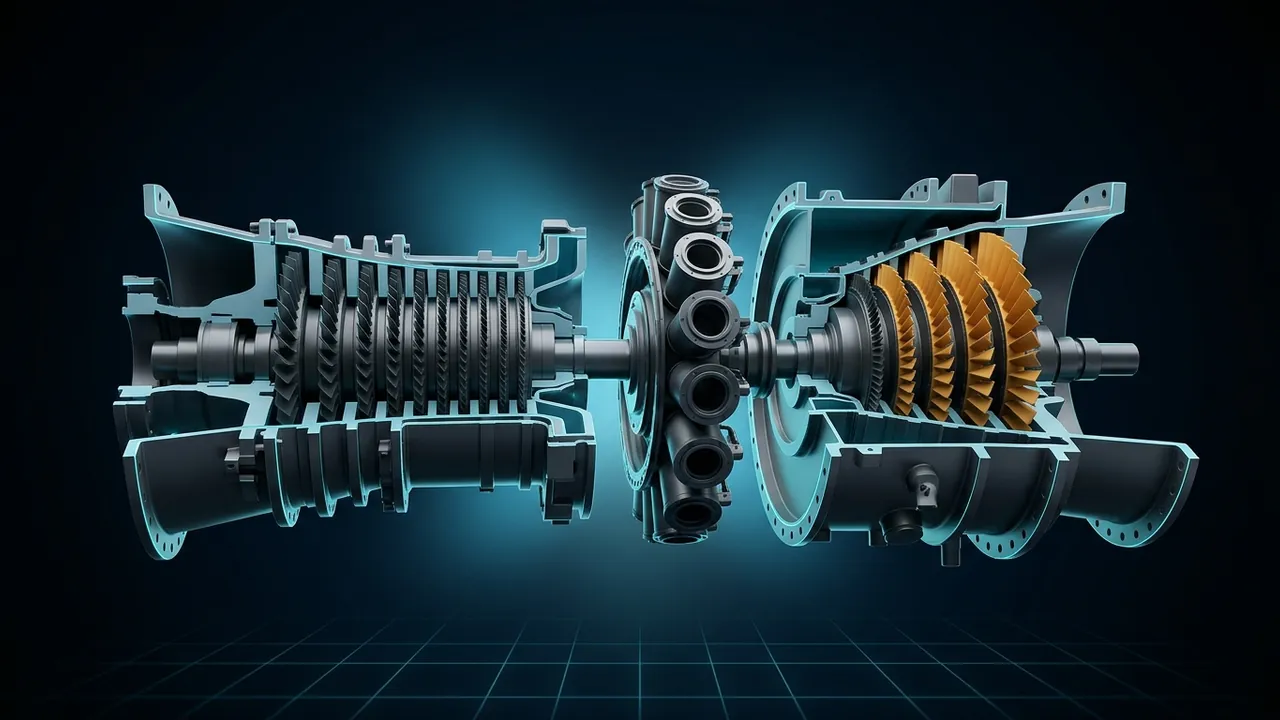
A data center developer can buy land in a month, pour foundations in a season and fill a building with servers in a year. Then they call a turbine maker and hear a delivery date near the end of the decade. Gas turbine lead times have become one of the hardest constraints in the whole power buildout, and they quietly decide which projects get built and which stay on slides. Why are gas turbine lead times so long, and what can a developer do about it?
Gas turbine lead times stretched to roughly five years or more for large units because orders surged far faster than the few major manufacturers could expand production. Data centers, utilities replacing retiring plants and new industrial loads all ordered gas generation at once, while factory capacity, specialized castings and skilled labor stayed limited.
Smaller turbines are quicker, often in the range of one and a half to three years, but they are in demand too. Prices rose along with the waits. Developers are working around the squeeze with reciprocating engines, mobile and refurbished turbines, slot reservation fees, batteries and phased designs.
How Long Are Gas Turbine Lead Times Now?
Long, and longest for the biggest machines. Here is what industry analysts have reported:
| Turbine class | Reported wait | Who reported it |
|---|---|---|
| Gas turbines, average (2025) | Almost five years | Wood Mackenzie, via Manufacturing Dive (2026) |
| Large turbines, order to delivery | 5+ years | EPRI (2026), via Utility Dive |
| Gas turbines, overall | About six years | Wood Mackenzie (2026), via Power Engineering |
| Smaller turbines | About 18 to 36 months | EPRI (2026), via Utility Dive |
The Electric Power Research Institute laid out the split in a 2026 Utility Dive piece on five-year waits and rising turbine costs, noting that large turbines were running more than five years from order to delivery while smaller units took about 18 to 36 months. Manufacturing Dive reported in February 2026 that analysts at Jefferies saw the key large-frame makers as more than 90% booked for 2028.
Numbers like these move, sometimes quickly. Treat every figure here as a snapshot and check current lead times directly with manufacturers and packagers before you build a schedule around them.
Why Did Gas Turbine Lead Times Stretch So Far?
The short answer is a demand shock meeting a small, slow-to-expand supply chain.
Demand Jumped All at Once
Data center growth tied to AI, new factories, electrification and the retirement of older coal plants all pointed utilities and developers toward new gas generation at the same time. Grid operators' load forecasts jumped, and utilities filed plans with gigawatts of new gas capacity. Behind-the-meter data center projects added their own orders on top.
Wood Mackenzie's analysis, reported by Power Engineering in a piece on how gas turbine prices climbed 195%, put the backlog at about 110 GW of orders against manufacturing capacity of roughly 60 to 70 GW per year. When orders run well ahead of what factories can make, the queue grows every year until capacity catches up.
Supply Is Concentrated and Slow to Grow
Only a handful of companies build large gas turbines. Before the surge, the market had been through years of soft orders, and manufacturers had sized their factories for that slower pace. Expanding is not like adding a shift at a bottling plant:
- Hot-section blades and vanes are made from specialized superalloys with complex internal cooling passages, and only a few suppliers can cast them.
- Large forgings for rotors and casings come from a limited number of heavy foundries worldwide.
- Assembly and testing need experienced technicians who take years to train.
- Manufacturers are cautious about overbuilding capacity in case demand cools.
It is also not just the turbine. Generators, step-up transformers, high-voltage breakers and heat recovery steam generators all have their own queues, and a plant cannot run until every piece arrives.
Does Turbine Delivery Mean the Plant Is Ready?

A quoted lead time usually means the date the turbine ships from the factory, not the date it makes electricity. That gap catches first-time buyers off guard. A typical large turbine order moves through several stages:
- Budget pricing and a reservation or letter of intent to hold a manufacturing slot.
- A purchase contract with payment milestones, technical specifications and delivery terms.
- Manufacturing, assembly and factory testing.
- Shipping, which for large units means heavy-haul transport, special permits and sometimes rail or barge legs.
- Installation on a finished foundation, connection to gas, electrical and controls, then commissioning and performance testing.
The last step alone can take many months on a large plant, and it cannot start until the foundations, gas lateral, switchgear and substation are ready. So the real question is not "when does the turbine ship?" but "when does the whole plant reach commercial operation?" A five-year delivery quote can mean a five-and-a-half or six-year path to power if the rest of the project is not ready and waiting.
That is also why contracts matter. Delivery dates should carry liquidated damages or other remedies if they slip, and the buyer should know exactly what "delivery" means in the contract: ex-works at the factory, at port, or on the pad.
What Have Long Waits Done to Prices?
Scarcity raised prices. Wood Mackenzie expected turbine prices to reach about $600 per kW by the end of 2027, according to the Power Engineering report. Whole projects got more expensive too: Latitude Media reported in 2025 that combined-cycle projects targeting 2030 and 2031 were routinely reporting costs above $2,000 per kW, and that manufacturers had begun charging reservation fees just to hold a place in line.
Those figures describe different things, equipment alone versus a whole plant, so do not compare them directly. The direction is what matters: buyers are paying more, earlier, for delivery dates further away.
How Are Developers Working Around Long Lead Times?
The most common workarounds trade some efficiency, cost or simplicity for speed:
- Reciprocating engines. Gas engine gensets come from different factories with shorter queues, and they arrive in blocks of a few megawatts that can be added in phases.
- Mobile and trailer-mounted turbines. Units built for fast deployment can bridge a project until permanent generation or a grid connection arrives.
- Smaller industrial turbines. Units in the 5 to 40 MW class often deliver well ahead of large frames, though at higher cost per kW and lower efficiency than big combined-cycle plants.
- Used and refurbished turbines. Units removed from retired or repowered plants can be overhauled and moved, if the condition and emissions permits work out.
- Slot reservations. Paying a fee to reserve factory capacity years ahead, sometimes before a site is fully secured.
- Batteries and hybrids. Storage can cover peaks and load steps, letting a site start with less generation.
- Phased designs. Start with engines or simple-cycle units, then add heat recovery and a steam turbine later when equipment arrives.
None of these is free. Engines and small turbines usually burn more gas per MWh than a large combined-cycle plant, so early speed can mean higher fuel bills for years. Reservation fees are money at risk if the project stalls.
What Long Lead Times Mean for Project Schedules
On many projects, equipment is now the critical path, not permitting or construction. That flips the usual order of work. Developers who once picked equipment after securing land and permits now often place equipment orders or reservations first, then build the rest of the schedule backward from delivery dates.
It also changes where projects go. Sites with gas supply, room for on-site generation and workable air permitting can take whatever equipment is available sooner, which is part of the appeal behind Permian Basin data centers and other projects in gas-producing regions. A site waiting on both a grid connection and a large turbine faces two long queues instead of one.
Practical steps for anyone planning a gas-fired project:
- Build a long-lead list early: turbines or engines, generator step-up transformers, switchgear, breakers and any heat recovery equipment.
- Get firm delivery dates in writing, with remedies if they slip.
- Run permits in parallel with procurement, not after it.
- Keep a plan B technology priced and ready.
Will Gas Turbine Lead Times Come Down?
Probably, but not overnight. Manufacturers have announced factory expansions, and Wood Mackenzie said in early 2026 that it expected average lead times to start falling by 2027. New capacity takes years to build and staff, though, and it only shortens queues if demand does not keep climbing faster.
Two things could shorten waits sooner: a slowdown in data center construction, which would free factory slots, or a shift toward engines, batteries and other technologies that pull orders away from large turbines. Realistically, plan for long waits through at least the next few years, and treat any shorter quote as a pleasant surprise to verify, not a baseline.
Gas Turbine Lead Times Are Now a Siting Decision
Gas turbine lead times stretched to around five years for large units because a surge of orders hit a small, specialized supply chain that cannot expand quickly. Prices rose with the waits, and reservation fees became normal.
For developers, the lesson is to treat equipment as the first constraint, not the last. Lock in what you can, keep a faster technology in your back pocket, and choose sites where on-site options give you room to move. Confirm current lead times with suppliers before every major decision, because these numbers change faster than most project schedules.