How Loud Are On-Site Generators? – Noise Limits and Fixes
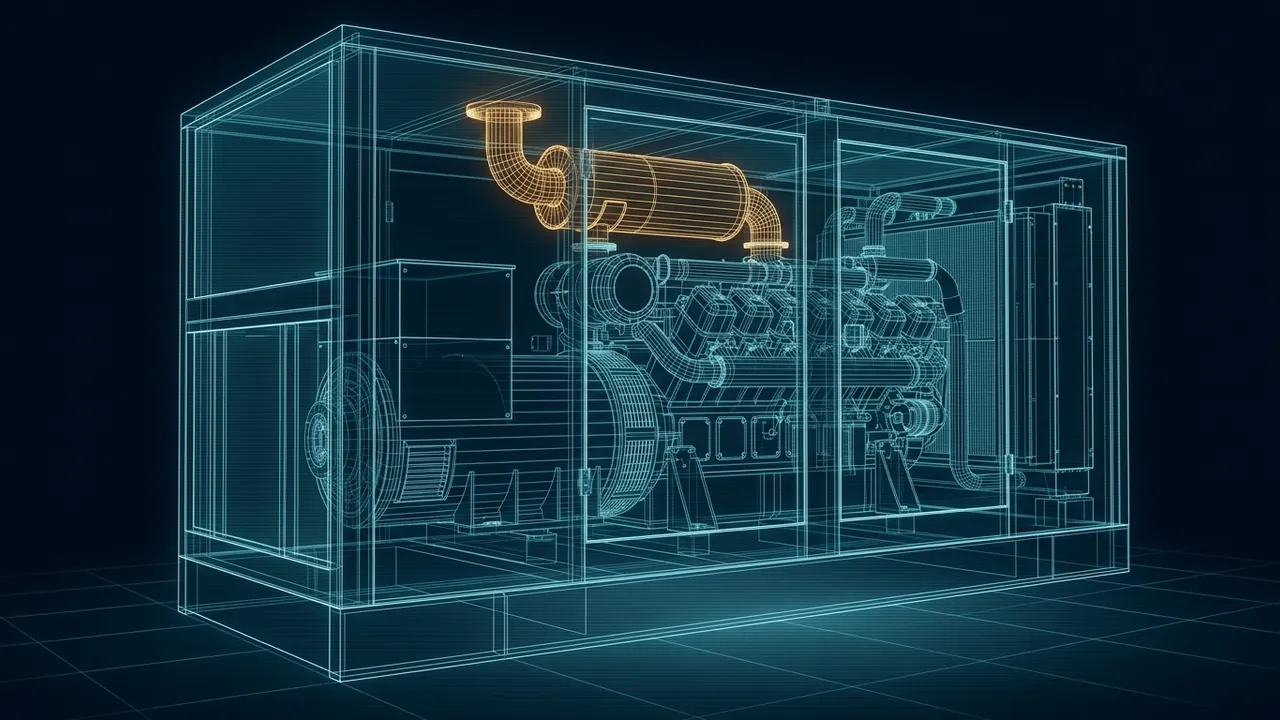
How loud is too loud? For an on-site power project, that question rarely comes up in the first meeting. It comes up later, when the acoustical report arrives, or at the zoning hearing, when a neighbor asks what a generator test will sound like from her porch. By then the site plan is drawn and the equipment is half ordered. Generator noise is easier and cheaper to solve on paper than in the field. So how loud are on-site generators, what limits apply, and how do you bring the sound down?
A large diesel or gas generator can exceed 80 dBA at 23 feet even in a basic weatherproof enclosure, while a well-designed sound-attenuated enclosure can bring the same unit down to about 65 dBA. Sound then drops about 6 dB each time the distance doubles, and several units running together add to the total.
Many local ordinances limit noise at a home's property line to roughly 50 to 55 dBA during the day and 5 to 10 dB less at night, so a project with many engines near houses needs careful design. The fixes are well known: distance, enclosures, exhaust silencers, barriers, careful layout and sensible test schedules.
How Is Generator Noise Measured?
In decibels, usually A-weighted (dBA), which adjusts the measurement to match how human ears hear. Manufacturers typically publish sound data at 7 meters (about 23 feet) from the unit, sometimes at 1 meter as well, and often for several enclosure options. Always check which distance and which enclosure a number refers to before comparing two quotes.
Decibels are logarithmic, which trips people up. A few rules of thumb help:
- A 3 dB increase means twice the sound energy, a change most people can just notice.
- A 10 dB increase sounds roughly twice as loud to the ear.
- Two identical sources together are 3 dB louder than one, not twice the decibels.
Where Does the Noise Come From?
A generator set is several noise sources bolted together. The engine itself makes mechanical noise from combustion, valves and gears. The exhaust is often the loudest single source if it isn't silenced well. The radiator fan pushes huge amounts of air and creates a broad whooshing sound. Air intake, the alternator and vibration through the skid and foundation add the rest.
Engines also produce plenty of low-frequency sound, the deep rumble you feel as much as hear. Low frequencies travel farther and pass through walls and barriers more easily than high-pitched noise. That is why a site can meet a dBA limit and still draw complaints about a hum.
How Loud Are On-Site Generators in Practice?
The enclosure makes the biggest difference. A Consulting-Specifying Engineer article on complying with codes and controlling generator noise gives a useful example: a 900 kW unit measured more than 80 dBA at 23 feet in a sealed weather enclosure, versus about 65 dBA in a sound-rated enclosure. The same article says a full treatment (enclosure, sound absorption and vibration isolators) can cut 35 to 40 dBA compared with an open unit.
For a sense of scale, 65 dBA is about the level of a normal conversation close up, while 80 dBA is closer to heavy traffic at the curb. An open, unhoused unit is louder still.
How Does Generator Noise Change With Distance?
Sound from a compact source outdoors falls about 6 dB every time you double the distance, before counting ground absorption, barriers or weather. Here is a worked example using the two enclosures above, for one unit:
| Distance | Weather enclosure (80 dBA at 23 ft) | Sound-rated enclosure (65 dBA at 23 ft) |
|---|---|---|
| 23 ft | 80 dBA | 65 dBA |
| 92 ft | 68 dBA | 53 dBA |
| 184 ft | 62 dBA | 47 dBA |
| 368 ft | 56 dBA | 41 dBA |
| 736 ft | 50 dBA | 35 dBA |
Now add more units. Identical sources combine as 10 × log10(number of units). Four units add about 6 dB, and ten units add 10 dB. So ten sound-rated units at 368 feet would be roughly 41 + 10 = 51 dBA, which may already break a 45 or 50 dBA nighttime limit at a nearby home. Real projects use acoustical modeling software, often based on the ISO 9613-2 method for outdoor sound, because terrain, buildings and reflections change the answer.
What Are Typical Generator Noise Limits?
Limits are set by states, counties and cities, and they vary widely. Most are measured at the receiving property line and depend on what kind of land sits there. Residential limits in many places fall around 50 to 55 dBA by day, with nighttime limits 5 to 10 dB lower. Commercial and industrial receivers are usually allowed more. The Consulting-Specifying Engineer piece cites a 60 dB limit for commercial property in Washington State as an example.
Codes often treat emergency operation differently from routine testing. A generator running during a real outage may be exempt, while weekly or monthly test runs are not. Rural sites deserve extra care: quiet country nights can have very low background noise, so a sound that would vanish in a city stands out. Check with the local planning office and counsel for the exact rules that apply to your site.
How Do You Reduce Generator Noise?

Start with the cheapest tools and work up. In rough order of cost-effectiveness:
- Distance. Each doubling buys about 6 dB, and land is often cheaper than steel.
- Layout. Point exhaust outlets and radiator discharge away from homes, and use buildings as shields.
- Sound-attenuated enclosures. Vendors offer several levels of attenuation, with lined walls and baffled intake and discharge openings.
- Better exhaust silencers. Industrial, residential and critical grades exist, each quieter than the last.
- Vibration isolators and flexible connections, to keep engine vibration out of the slab and structure.
- Barrier walls and earth berms, which work best when close to either the source or the listener.
- Remote radiators with larger, slower fans, which cut fan noise sharply.
- Operating rules: test during weekday daytime hours and run fewer units at a time.
For sites with prime power engines that run every hour of the year, noise is no longer occasional. Those plants often put engines inside full buildings with acoustic wall panels, silencers on every opening and careful ventilation design.
Are Natural Gas Generators Quieter Than Diesel?
Not by enough to change the plan. Gas and diesel reciprocating engines of similar size produce broadly similar sound levels, and both need the same kinds of enclosures and silencers. The bigger difference is duty. Diesel units at data centers usually sit in standby and run for tests and outages. Gas engines on behind-the-meter sites often run all the time, so their sound has to meet the nighttime limit every night, not just during an occasional test.
Gas turbines have a different sound signature. Much of their noise comes from the air intake and exhaust, with more high-frequency content, which silencers and enclosures handle well. Larger units are typically housed in acoustic packages from the factory. Whatever the machine, ask the vendor for sound data at a stated distance, for the exact enclosure being quoted.
What Should a Noise Study Include?
A useful study answers the question the neighbors will ask: what will I hear, and when? At a minimum, it should cover:
- A measured ambient baseline at the nearest homes, day and night
- Every unit on site, including cooling equipment, not just one generator
- Normal operation, routine testing and a full outage with all units running
- Predicted levels at each property line, compared with the applicable limits
- Low-frequency content, not only the dBA total
Who Is Responsible for Meeting the Noise Limit?
Ultimately the owner, since the permit is in the owner's name. But you can push the risk to the people building the plant. Write a clear noise guarantee into your EPC contract or equipment purchase order: a measured level at defined points, the test method, and what happens if the plant misses. Pair that with an ambient sound survey before construction, so everyone agrees on the baseline, and a verification test after startup.
Here is what kills a project in month three: a sound study run on a single generator when the plant has twenty. Ask for the full-site model early.
Fix Generator Noise on Paper Before the Hearing
So, how loud are on-site generators? Loud, often 80 dBA or more at 23 feet without serious treatment, and still noticeable with it once you add up many units. But generator noise follows simple physics. Every doubling of distance takes off about 6 dB, every doubling of units adds 3 dB, and good enclosures and silencers can cut 30 dB or more.
The next step is practical. Find your local limits, measure the background sound at your nearest neighbors, and model the whole plant before you lock the layout. Fix it on paper and you'll rarely have to fix it with a bulldozer.