What Is Large Load Interconnection? – How Big Users Get Grid Power
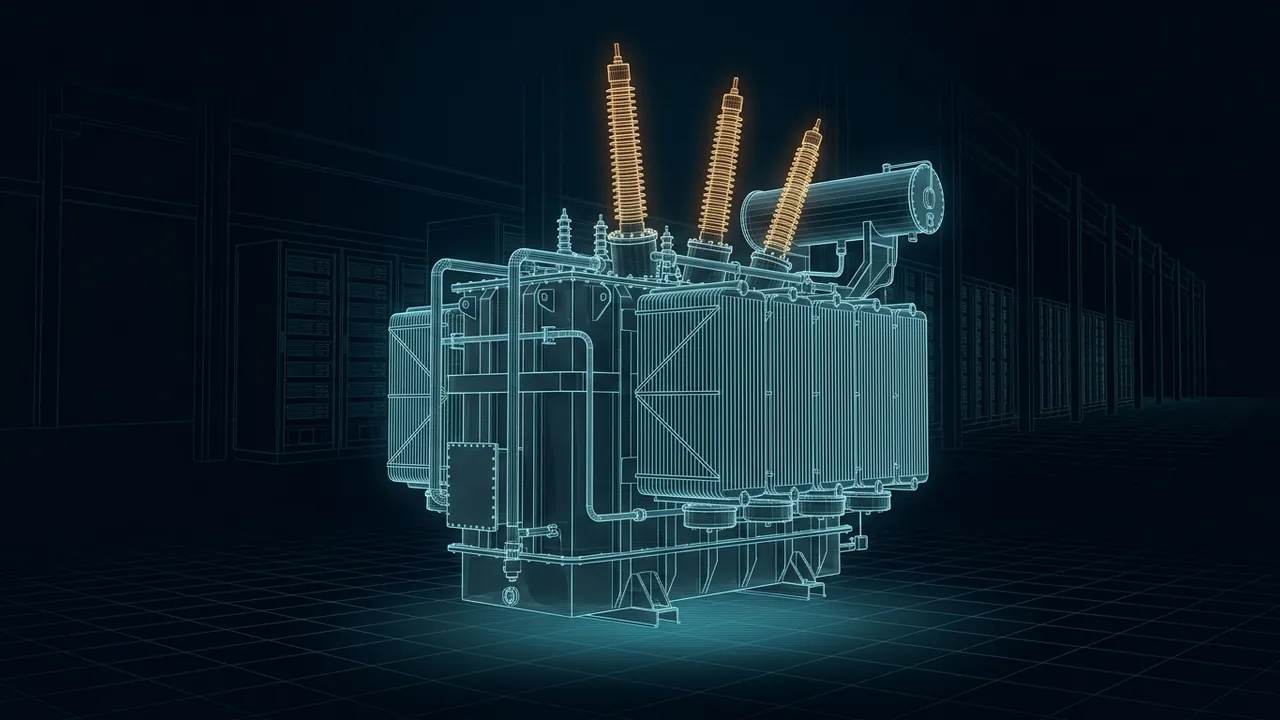
Plugging in a house takes a phone call. Plugging in a factory takes a few months. Plugging in a 300 MW data center campus can take years and a stack of engineering studies thicker than the site plan. That last process has a name now, and utilities, grid operators and regulators are all rewriting the rules for it. What is large load interconnection, and how does a big user actually get grid power?
Large load interconnection is the process a very large electricity customer, usually tens to hundreds of megawatts (MW), goes through to request service, get studied, pay for new facilities and connect to the transmission grid. The customer applies to its utility or grid operator, which studies whether nearby lines, transformers and generation can handle the new demand.
The customer then signs agreements covering construction, cost sharing and often a long-term minimum bill. It used to happen quietly under each utility's own rules. The wave of data center requests since 2023 has pushed states, grid operators and the Federal Energy Regulatory Commission (FERC) to build formal, standardized processes.
What Counts as a Large Load?
A large load is any single customer big enough that the grid has to be studied before it connects, and there is no single national threshold. Each process draws its own line. Here are a few documented examples:
| Rule or process | Threshold |
|---|---|
| Southwest Power Pool (SPP) High Impact Large Load process | Over 10 MW at 69 kV or below, or 50 MW and up at 69 kV or above |
| DOE directive asking FERC to act (October 2025) | Loads over 20 MW |
| AEP Ohio data center tariff (2025) | New data centers over 25 MW |
| Texas Senate Bill 6 (2025) | Loads of 75 MW or more |
For scale, a 75 MW load running around the clock uses about as much electricity in a year as tens of thousands of homes. That is why a single request can change a utility's whole resource plan.
How Does Large Load Interconnection Work, Step by Step?
Large load interconnection follows a familiar sequence almost everywhere, even though names, fees and timelines differ by utility. A typical path looks like this:
- Pre-application: the developer asks the utility informally whether a site can support the load and roughly when.
- Formal load request: the customer submits the site, peak MW, ramp schedule, voltage level and proof of site control, usually with a study fee.
- Load study: the utility (and the regional grid operator, where one exists) models power flows, voltage, short circuit levels and contingencies with the new load added.
- Facilities study: engineers design the new substation, lines and upgrades, with cost estimates.
- Agreements: an interconnection or construction agreement covers the physical work; an electric service agreement or tariff covers what the customer pays for power over time.
- Construction and energization: the utility builds its facilities, the customer builds its own substation equipment, and the load ramps up in phases.
Utilities now ask harder technical questions, too. After a July 2024 event in which a transmission fault caused roughly 1,500 MW of data center load to switch to backup power at once, according to a North American Electric Reliability Corporation (NERC) incident review, many study processes ask how a facility's uninterruptible power supply (UPS) and protection settings behave during voltage dips. Expect requests for detailed equipment models, not just a peak MW number.
The ramp schedule matters more than people expect. A campus that asks for 50 MW in year one and 300 MW by year five is far easier to serve than one asking for all 300 MW on day one.
Who Pays for the Substation and Power Lines?
The large customer usually pays directly for facilities that serve only it, and the utility's other customers may share some of the cost of broader network upgrades. Where that line falls is the most argued-over part of the whole process.
Facilities used only by the customer, like a dedicated substation and the short line feeding it, are normally paid by the customer up front or through a contribution in aid of construction. Upgrades deeper in the grid, which also help other customers, are more often added to the utility's rate base and recovered from everyone over time. That is where ratepayer advocates push back.
To protect other customers, many utilities now require long contracts with minimum charges. Ohio regulators, for example, approved an AEP Ohio tariff requiring new data centers over 25 MW to pay for at least 85% of their subscribed capacity for up to 12 years, with exit fees. Here is what that means in practice, using an illustrative 300 MW subscription:
- Subscribed capacity: 300 MW
- Minimum billed demand: 300 MW × 0.85 = 255 MW
- If the campus only ramps to 150 MW, it still pays demand charges on 255 MW
The idea is simple. If the utility builds for 300 MW, the customer who asked for it carries the risk that the load never shows up.
Why Are Large Load Requests Piling Up?
Large load requests are piling up because data center developers are asking for far more power than utilities have ever been asked to connect, often at several sites at once. In Texas, the volume of ERCOT large load requests reached roughly 233 GW by the start of 2026, according to Utility Dive's reporting on grid operator data, and most of that is data centers.
Not all of it is real. Developers file at several sites, chase the fastest answer and drop the rest. Utilities have the same problem generator queues had for years: they must study requests that will never be built, and every phantom request slows down the serious ones. Study fees, site control rules and financial security requirements are the standard tools for filtering them out.
My take: the speculation is a symptom, not the disease. Developers multiply requests because timelines are unpredictable. A clear, fast and expensive-to-abuse process would probably shrink the pile on its own.
How Is Load Interconnection Different From Generator Interconnection?
Load interconnection and generator interconnection study similar physics, but they sit under different rules and different regulators. Generators connecting to the transmission grid follow FERC-approved procedures in each transmission provider's tariff. Loads have traditionally been retail customers of a utility, overseen by state utility commissions.
Large loads also raise a question generators don't: is there enough supply? A new power plant adds supply. A new 500 MW load needs someone, somewhere, to add 500 MW of supply plus a reserve margin. So large load studies increasingly look at resource adequacy, not just wires.
Hybrid projects blur the line further. A data center paired with on-site generation, or built next to an existing power plant, is both a load and a generator at the same point. That is one reason regulators are revisiting the rules.
What Is FERC Doing About Large Load Interconnection?
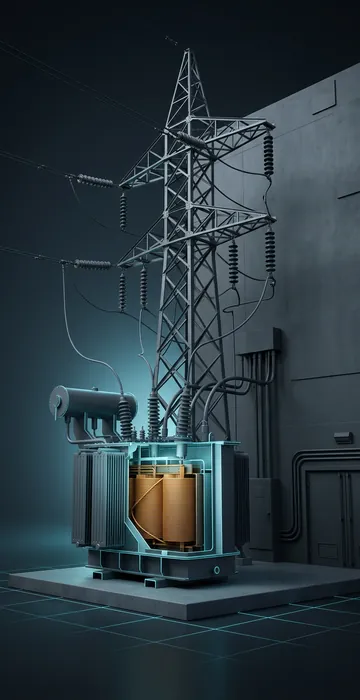
In October 2025 the US Department of Energy used its authority under Section 403 of the Department of Energy Organization Act to direct FERC to consider rules for connecting large loads to the interstate transmission system. As summarized by Vinson & Elkins, the directive called for an advance notice of proposed rulemaking covering loads over 20 MW and hybrid facilities that combine load and generation, and asked for final action by April 30, 2026.
This is a real jurisdictional shift. States have long controlled retail service, and many state regulators are wary of FERC reaching into it. Expect litigation and long comment fights over where federal authority ends. Because the rules are moving, check the current FERC docket and your state commission's orders before relying on any summary, including this one.
Meanwhile, regional operators are not waiting. SPP received FERC acceptance of its own large load process in early 2026, and Texas wrote large load standards directly into state law. Berkeley Lab's large load literature review counted 24 states with at least one approved large load tariff as of July 2026.
How Long Does It Take a Large Load to Connect?
It depends almost entirely on whether the grid near the site has spare capacity. A load that fits on an existing substation with headroom might connect in a year or two. A load that needs new high-voltage transmission or new generation can wait much longer, and Caterpillar's 2025 white paper on bridge power cited utility waits of three to seven years for some data center sites.
That gap is why so many developers now pick sites by available power first and fiber, land and tax breaks second. It also explains the rise of on-site gas generation and batteries as bridge power while the grid connection is built.
Large Load Interconnection Is Where the Buildout Meets the Grid
Large load interconnection is the process that turns a data center announcement into a working facility: request, study, upgrades, agreements and energization. It used to be routine utility work. At hundreds of MW per site, it is now one of the main constraints on how fast the industry can grow.
The rules are being rewritten at every level at once, from utility tariffs with minimum bills to statewide laws to a possible federal framework. Each change tries to balance speed for developers against fairness for existing ratepayers.
So the order of operations matters. Call the utility before you buy land, not after. Bring a ramp schedule you can actually hit, and expect contract terms that put long-term cost risk on you. Because these rules are still in motion, get current advice from counsel and your utility before committing capital.