What Does Texas Senate Bill 6 Mean for Data Centers? – Key Rules
If you've followed Texas power policy since the 2021 winter storm, you know lawmakers there don't love surprises on the grid. Then came a flood of data center requests measured in tens of gigawatts. The Legislature's answer arrived in 2025 as Texas Senate Bill 6, a law aimed squarely at very large electricity users. Developers, utilities and the grid operator have been sorting through it ever since. What does Texas Senate Bill 6 actually mean for data centers?
Texas Senate Bill 6 sets statewide rules for how large loads of 75 MW or more, mostly data centers, connect to and operate on the ERCOT grid. Applicants must pay a study fee of at least $100,000, show site control and disclose on-site backup generation.
New large loads connecting after December 31, 2025 must install equipment that lets them be curtailed in grid emergencies, and ERCOT can direct loads with backup generation to switch to it. It also adds review of some co-location deals and of transmission cost rules. Details depend on rulemaking at the Public Utility Commission of Texas (PUCT), so check current rules.
What Is Texas Senate Bill 6?
Texas Senate Bill 6 (SB 6) is a 2025 state law from the 89th Texas Legislature that governs large electricity loads on the grid run by the Electric Reliability Council of Texas (ERCOT). According to a summary by the law firm Bracewell, it was signed on June 20, 2025.
The law responds to a specific problem. ERCOT's queue of large load requests grew to several times the grid's peak demand, and lawmakers worried that existing customers would bear the costs and the reliability risks. SB 6 tries to make large loads show they are serious, pay their way and help in emergencies.
The numbers explain the urgency. The Texas Reliability Entity reported in late 2025 that large-load demand under study in ERCOT rose from about 72 GW to more than 200 GW in roughly 11 months, with data centers and crypto mining making up over 80% of it. For comparison, ERCOT's record peak demand has never reached 100 GW. Even if only a fraction of those requests get built, they would change how Texas plans generation and transmission.
Which Data Centers Does SB 6 Cover?
SB 6 covers large loads of 75 MW or more in the ERCOT region. That threshold catches most new hyperscale and AI campuses, many crypto mining sites and some large industrial plants. Smaller enterprise and edge data centers fall below it.
Some provisions only apply going forward. The curtailment equipment requirement, for example, applies to large loads that connect after December 31, 2025. Existing facilities may still be affected by emergency and cost provisions, depending on how the PUCT writes its rules.
Parts of Texas outside ERCOT, such as areas served through the Southwest Power Pool (SPP) or the Midcontinent Independent System Operator (MISO), follow different grid rules. Developers there should check which provisions reach them.
What Does SB 6 Require When a Data Center Applies to Connect?
When a data center applies to connect, SB 6 requires it to put real money and real information on the table. The Texas Legislature's bill analysis lists the core items:
| Requirement | What it means in practice |
|---|---|
| Study fee of at least $100,000 | Discourages placeholder requests at multiple sites |
| Proof of site control | The developer must own, lease or have rights to the land |
| Disclosure of on-site backup generation | ERCOT learns how much backup capacity exists and where |
| Interconnection standards set by the PUCT | Uniform rules for studies, timelines and cost responsibility |
Here's why a fee matters. Say a developer files at five sites to see which gets the fastest answer. At $100,000 each, that's $500,000 just to ask, before any engineering. Real projects can absorb that easily. Speculative filings get much more expensive.
The site control and disclosure rules serve the same goal. They help ERCOT and the transmission utilities separate projects with land and capital from projects that exist mostly in a slide deck.
Can ERCOT Curtail a Data Center Under SB 6?
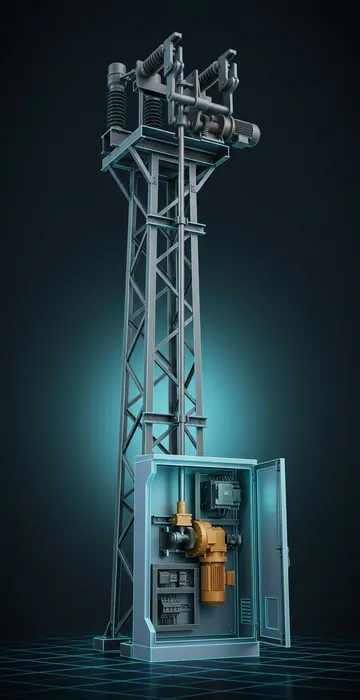
Yes. Under SB 6, ERCOT gains clearer authority to reduce power to large loads during grid emergencies. New large loads connecting after 2025 must install equipment that allows remote curtailment, so the grid operator isn't relying only on phone calls during a crisis.
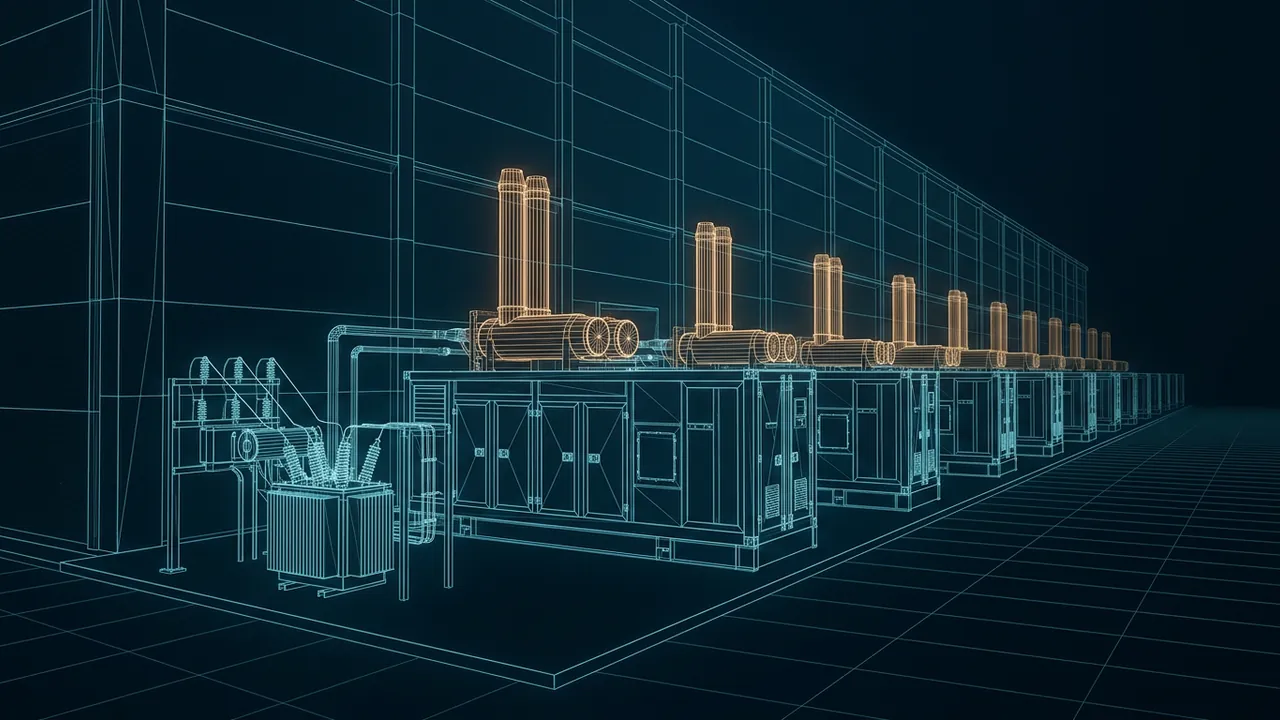
The law also addresses backup generators. A large data center often has many MW of diesel or gas backup on site. Bracewell's summary says ERCOT can require large loads to deploy that backup generation or curtail during emergencies. Doing so takes their demand off the grid at the moment it's needed most.
For operators, this changes the design brief. Backup generators were built for rare utility outages. Under SB 6 they may also be called during grid emergencies, which affects fuel storage, testing, maintenance and air permit conditions. Engines permitted only for emergency use have operating limits, so check with your air permitting authority and counsel.
How Does SB 6 Treat Data Centers Co-Located With Power Plants?
SB 6 adds a regulatory review for arrangements where a new large load connects at an existing power plant and nets its consumption against that plant's output. That's the Texas version of a debate playing out nationally over any data center co-located with a power plant.
The concern is that a plant serving a data center behind the meter stops serving the wider grid, and the data center may avoid some grid charges while still relying on the grid for backup. According to Bracewell, ERCOT has 120 days to study such an arrangement and the PUCT has 60 days to decide on it. The law doesn't ban co-location. It makes it reviewable.
Does SB 6 Change Transmission Costs for Data Centers?
SB 6 asks regulators to look again at how transmission costs are assigned, which could change bills for large customers. Large ERCOT customers currently pay transmission costs based largely on their demand during the four summer peak intervals, a method called four coincident peak (4CP). Flexible loads have been able to cut those charges by shutting down during likely peaks.
The bill analysis lists a review of that 4CP approach. Any change would come through PUCT proceedings, and the outcome could shift costs between flexible loads, steady data centers and everyone else.
How Does SB 6 Affect Data Center Costs and Schedules?
For most serious projects, SB 6 adds modest direct costs and some design work, while the bigger effect is on how studies get prioritized. The study fee is small next to the price of a large campus. Curtailment controls and backup generation planning add engineering hours, and possibly equipment, but they're manageable if planned early.
The schedule question is harder to call. Fewer speculative requests should, in theory, shorten study times for everyone else. Added review steps, like the co-location review, add time for the projects that trigger them. How it nets out depends on how the PUCT and ERCOT implement the law.
What Is Still Being Decided?
A lot. SB 6 sets direction, but the PUCT and ERCOT write the operating details. Open questions include exact interconnection standards, how emergency curtailment is ordered and compensated, how backup generation calls work in practice and what the 4CP review produces.
My read: the law itself is fairly clear about intent, while the implementation is where developers will win or lose time. Following PUCT dockets and ERCOT stakeholder meetings is worth the effort if you have a project in Texas.
What Should Data Center Developers in Texas Do Now?
Developers should treat SB 6 as part of the site plan, not an afterthought. A practical checklist:
- Budget for the study fee and file only where you have land secured.
- Document backup generation capacity accurately from the start.
- Design controls and switchgear for remote curtailment if connecting after 2025.
- Review air permits for any backup engines that may be called in emergencies.
- If co-locating at an existing plant, plan for ERCOT and PUCT review time.
- Track PUCT rulemakings and talk with experienced Texas energy counsel.
Texas Senate Bill 6 Asks Data Centers to Be Good Grid Citizens
So what does Texas Senate Bill 6 mean for data centers? It means higher entry costs, more disclosure and a firm expectation that big loads will step back when the grid is stressed. It also means co-location deals and transmission cost strategies get a closer look from regulators.
None of that shuts the door on Texas. Serious projects with land, capital and flexible designs should find the process more predictable than the looser one it replaced. If you have a Texas site in mind, the single most useful thing you can do this week is ask your transmission utility how it is applying SB 6 today, then build the fee, the curtailment gear and the backup plan into your budget before you file.