Battery Storage Fire Safety – LFP Chemistry and NFPA 855
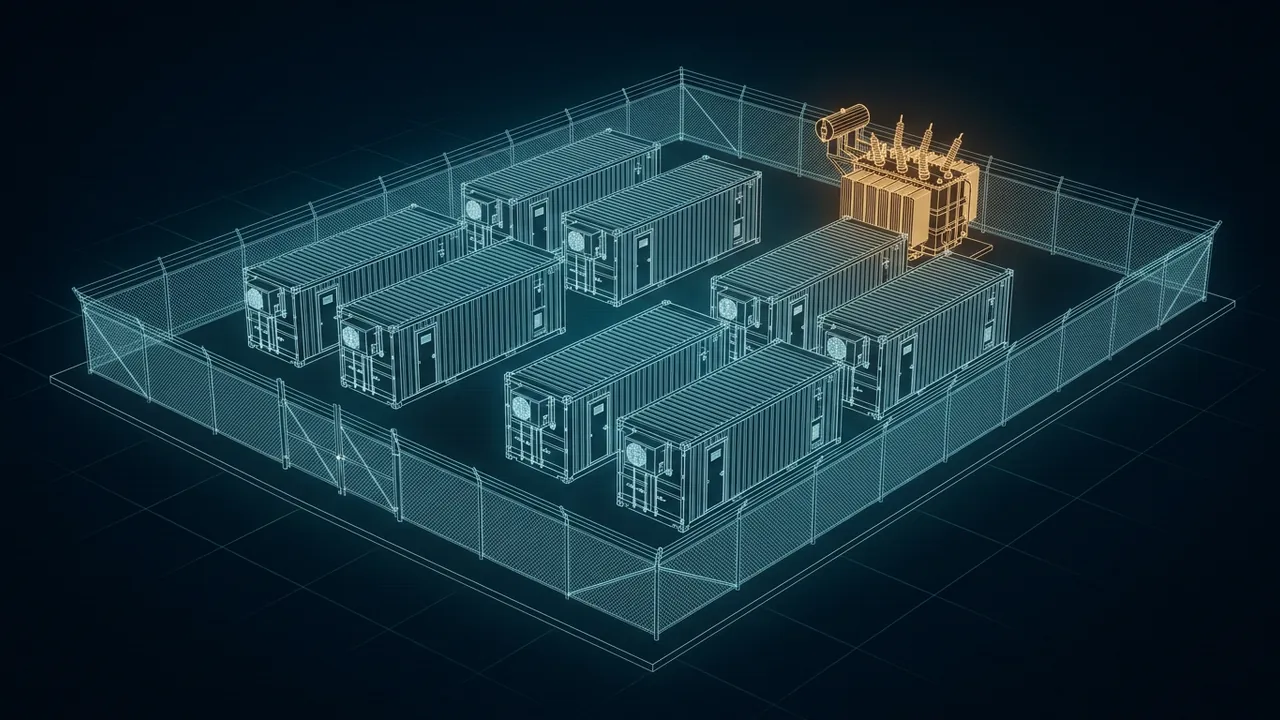
A lithium-ion battery is a tightly packed store of chemical energy, and most of the time it stays exactly where it belongs. When a cell fails badly, though, it can heat itself, release flammable gas and pass that heat to the cell next door. Scale that up to a container holding thousands of cells and you can see why fire marshals, insurers and neighbors ask hard questions about storage projects. How safe is battery storage, and what do LFP chemistry and NFPA 855 do about the fire risk?
Battery storage fire safety rests on three layers: a safer chemistry, systems tested to stop failures from spreading, and installation codes that plan for the worst case anyway. Lithium iron phosphate (LFP) cells are much harder to push into thermal runaway than older nickel-based chemistries, and they release less energy when they do fail.
Product standards such as UL 9540 and the UL 9540A test method show how a system behaves when a cell fails. NFPA 855, the national installation standard for energy storage, then sets requirements for spacing, explosion control, detection, ventilation and emergency planning. No battery is risk-free, but a properly designed and installed LFP system is a well-managed hazard.
What Is Thermal Runaway in a Battery?
Thermal runaway is a chain reaction in which a battery cell heats up faster than it can shed heat, triggering internal reactions that make it hotter still. It can start with a manufacturing defect, physical damage, overcharging, an external fire or an internal short circuit.
The sequence is roughly the same every time:
- A cell overheats, and its internal layers start breaking down.
- The cell vents a mix of gases that can include hydrogen, carbon monoxide and hydrocarbons, many of them flammable.
- Temperatures climb fast, and the cell may ignite.
- Heat spreads to neighboring cells, and the failure can move from cell to module to rack.
Two hazards come out of this. One is fire. The other, often more dangerous to responders, is a buildup of flammable gas inside an enclosed container that ignites all at once, which is called a deflagration. Modern codes treat that gas hazard as seriously as the flames.
Why Is LFP Chemistry Considered Safer?
LFP is considered safer because its iron phosphate cathode is chemically stable, so the cell tolerates heat and abuse better and releases less energy if it does fail. Nickel manganese cobalt (NMC) cells pack more energy into each kilogram, which is why they're popular in cars, but that extra energy comes with a lower thermal runaway threshold.
Vertiv, which builds uninterruptible power supply (UPS) systems for data centers, describes LFP as the safest lithium-ion chemistry for that use. Stationary storage has moved heavily toward LFP for the same reasons: weight and size matter less in a container on a gravel pad than in a vehicle, and safety and cycle life matter more.
| Trait | LFP | NMC |
|---|---|---|
| Thermal runaway onset | Higher temperature | Lower temperature |
| Energy released in failure | Lower | Higher |
| Energy density | Lower | Higher |
| Cycle life | Typically longer | Typically shorter |
| Common use | Stationary storage, UPS | Electric vehicles, some older storage |
Safer doesn't mean safe to ignore. LFP cells can still enter thermal runaway and still vent flammable gas. The chemistry buys margin; it doesn't replace engineering.
What Does NFPA 855 Require?

NFPA 855, the Standard for the Installation of Stationary Energy Storage Systems, sets the rules for where and how storage systems can be installed and what protections they need. Its first edition was the 2020 edition, and it applies to lithium-ion systems above 20 kWh. States and cities adopt it, sometimes with changes.
The Texas Department of Insurance's State Fire Marshal's Office, for example, explains in its battery energy storage FAQ that the 2020 edition is enforceable in areas under its jurisdiction and lists requirements for emergency plans, thermal runaway protection, detection and suppression.
The main requirements fall into a few groups:
- Listing and testing: Systems generally must be listed to UL 9540, with UL 9540A test data showing how fire spreads.
- Size and spacing: Limits on how much energy can sit in one group and how close groups can be to each other, to buildings and to property lines, unless testing justifies something else.
- Explosion control: Either deflagration venting that safely releases pressure, or ventilation and gas detection designed to keep flammable gas below dangerous levels.
- Detection and suppression: Smoke or gas detection, and fire suppression where required.
- Emergency planning: An emergency response plan, training for local responders and clear shutdown procedures.
- Life-cycle steps: Commissioning, ongoing maintenance and safe decommissioning.
What Is the Difference Between UL 9540 and UL 9540A?
UL 9540 is a safety standard that a complete energy storage system can be certified to, covering electrical, mechanical and fire safety. UL 9540A is a test method, not a pass-fail certification. It forces a cell into thermal runaway and measures what happens next: how much gas is released, whether the failure spreads to other cells, modules or units, and how hot nearby surfaces get.
Code officials use UL 9540A results to decide whether a system needs larger spacing, extra explosion control or more suppression. A system that shows no unit-to-unit propagation in testing makes a stronger case for tighter layouts.
How Are Battery Containers Designed for Fire Safety?
Battery containers are designed to detect trouble early, keep a single failure from spreading, and manage gas so it can't build to an explosive level. The layers usually include:
- A battery management system (BMS) that watches every cell's voltage and temperature and trips the system offline when readings go wrong.
- Thermal management, typically air conditioning or liquid cooling, to keep cells in their comfortable range.
- Gas detectors that spot off-gassing before flames appear and trigger exhaust fans.
- Deflagration panels on the roof that relieve pressure upward, away from people.
- Barriers between modules and racks to slow propagation.
- Spacing between containers so a fire in one is less likely to reach the next.
Lessons from real incidents shaped these features. In 2019, flammable gas built up inside a battery container at a utility site in Surprise, Arizona, and ignited when firefighters opened the door, injuring several of them. Gas detection, explosion control and response plans that tell crews not to open a smoking container all trace back to events like that.
What Happens When a Battery Storage Fire Starts?
When a battery storage fire starts, responders usually focus on protecting people and nearby equipment rather than trying to put the battery out quickly. Lithium-ion fires can reignite, and pouring water into a container is not always the right call. Many fire departments cool neighboring containers and let the affected unit burn out under watch, following the site's emergency response plan.
That plan is the single most useful document a project owner can give a fire department. It explains the layout, the shutdown steps, who to call and what to expect. Good owners meet with local responders before the system is energized, not after something goes wrong. None of this work is for untrained people; it belongs to qualified responders and technicians.
How Does Fire Safety Apply at Remote Sites?
At remote sites, battery fire safety gets harder because help is far away and nobody may be on site. Remote monitoring of cell temperatures and gas sensors matters even more, as does generous spacing from fuel tanks, generators and buildings.
This comes up often in hybrid microgrids. A solar diesel hybrid at an oilfield or telecom site puts batteries, fuel storage and a generator close together, so layout and separation deserve as much attention as sizing. Local fire officials still have jurisdiction, even far from town.
Battery Storage Fire Safety Comes in Layers
Battery storage fire safety comes from stacking protections: LFP chemistry that resists thermal runaway, systems tested under UL 9540A to show failures stay contained, and NFPA 855 installation rules for spacing, explosion control, detection and emergency planning.
Each layer covers gaps in the others. Chemistry lowers the odds of a failure; testing proves it won't spread; codes plan for the case where both fall short.
For a project owner, the paperwork is where safety becomes real. Ask every vendor for its UL 9540 listing and the full UL 9540A report, not a summary. Find out which edition of NFPA 855 your city or county actually enforces. And get the fire marshal a draft site plan and emergency response plan while the layout can still change, because spacing is cheap on paper and expensive once the pad is poured.