What Is Combined Heat and Power? – Using Waste Heat Twice

Every gas engine sends more energy up its stack and out its radiators than it sends down the wire. That heat is not a side effect. It is most of the fuel you paid for. A typical power plant throws away more energy as heat than it turns into electricity. What is combined heat and power, and how does catching that waste heat change the economics?
Combined heat and power (CHP), also called cogeneration, is a system that generates electricity on site and captures the leftover heat for useful work like steam, hot water, space heating or cooling. A conventional plant turns roughly a third to a half of its fuel into electricity and rejects the rest. A CHP system uses the same fuel twice, so its total efficiency is much higher. The U.S. Department of Energy says CHP typically reaches about 65% to 75% efficiency, compared with about 50% for buying grid power and running a separate boiler. It pays off best at sites that need steady heat and power at the same time.
How Does Combined Heat and Power Work?
A CHP system has two halves. The first is a prime mover that makes electricity: a reciprocating engine, a gas turbine, a microturbine, a fuel cell or a steam turbine. The second is heat recovery equipment that captures energy the prime mover would otherwise dump to the air.
Where that heat comes from depends on the machine. Reciprocating engines give off heat in two main streams, hot jacket cooling water and hot exhaust, and both can be captured. Gas turbines put nearly all their waste heat into a large, hot exhaust stream, which is ideal for making steam in a heat recovery steam generator (HRSG). The recovered heat then goes to whatever the site needs.
Topping and Bottoming Cycles
Most CHP systems are topping cycles: fuel makes power first, and the leftover heat serves the process. Bottoming cycles work the other way around. An industrial process like a furnace or kiln produces high-temperature waste heat, and that heat drives a steam turbine or other generator. Bottoming cycles are less common but make sense at heavy industrial sites with lots of hot exhaust and nowhere to send it.
How Efficient Is CHP Compared to Separate Heat and Power?
The easiest way to see the benefit is to compare fuel use for the same outputs. The chart below uses a simple model with stated assumptions.
Model: a site needs 1,000 kW of electricity and 1,143 kW of heat.
- Separate: grid power from a plant at 33% efficiency needs 1,000 ÷ 0.33 ≈ 3,030 kW of fuel. A boiler at 80% efficiency needs 1,143 ÷ 0.80 ≈ 1,429 kW of fuel. Total: about 4,459 kW of fuel.
- CHP: an engine at 35% electric efficiency needs 1,000 ÷ 0.35 ≈ 2,857 kW of fuel. With 40% of the fuel recovered as useful heat, it delivers 2,857 × 0.40 ≈ 1,143 kW of heat at no extra fuel.
- Savings: (4,459 − 2,857) ÷ 4,459 ≈ 36% less fuel for the same electricity and heat.
1,000 kW electricity plus 1,143 kW heat, kW of fuel input
- Fuel for electricity
- Fuel for heat
Model: grid plant 33% efficient, boiler 80% efficient, CHP 35% electric efficiency plus 40% recovered heat. Illustrative, not a measured site.
View the data
| Fuel for electricity | Fuel for heat | Total | |
|---|---|---|---|
| Separate grid power + boiler | 3,030 kW | 1,429 kW | 4,459 kW |
| Combined heat and power | 2,857 kW | 0 kW | 2,857 kW |
Total efficiency tells the same story. Separately, the site gets 2,143 kW of useful output from 4,459 kW of fuel, about 48%. With CHP, it gets the same 2,143 kW from 2,857 kW of fuel, about 75%. Those results line up with the DOE's combined heat and power basics page. Real projects vary with equipment, load and how much heat the site can actually use.
Is CHP the Same as a Combined Cycle Plant?
No, though they share hardware. Both capture hot turbine exhaust, often in an HRSG. The difference is where the recovered energy goes. A combined cycle plant sends all of that steam through a steam turbine to make more electricity, so its only product is power. A CHP plant sends some or all of the recovered heat to a building or process as steam, hot water or cooling.
That is why a CHP system can post a higher total efficiency than even the best combined cycle plant. Heat is easier to use than to convert into electricity, so a CHP site counts nearly all of its recovered energy as useful output. The catch is that it needs a customer for that heat right next door. A combined cycle plant can sit anywhere near a gas line and a transmission line.
Some large industrial sites run both ideas at once, sending part of the steam to a steam turbine and part to the process. Engineers sometimes call these cogeneration plants with extraction, and they are common at refineries and chemical plants along the Gulf Coast.
What Prime Movers Are Used for CHP?
The choice depends on size, the kind of heat needed and how steady the load is. The EPA's Catalog of CHP Technologies gives reciprocating engines about 27% to 41% electric efficiency and gas turbines about 24% to 36%, both on a higher heating value basis.
| Prime mover | Typical heat output | Good fit |
|---|---|---|
| Reciprocating engine | Hot water from jacket cooling, plus exhaust heat | Small to mid sites, variable loads, hot water needs |
| Gas turbine | High-temperature exhaust for steam | Larger sites with steady steam demand |
| Microturbine | Moderate exhaust heat | Small commercial buildings |
| Fuel cell | Low to moderate heat | Sites wanting very low emissions |
| Steam turbine | Extraction or exhaust steam | Plants with boilers or bottoming cycles |
Can CHP Make Cooling Too?
Yes. Pairing CHP with an absorption chiller is often called trigeneration, or combined cooling, heat and power. An absorption chiller uses heat instead of a big electric compressor to drive its refrigeration cycle. The DOE's absorption chiller fact sheet lists single-stage units at a coefficient of performance around 0.7 to 0.8 and two-stage units around 1.35 to 1.4, meaning a unit of heat yields roughly that much cooling.
Those numbers look low next to electric chillers, but the heat is essentially free once the engine is running. For a site with year-round cooling demand, like a data center, that is the main way CHP heat finds a home. If that use case interests you, read up on how an absorption chiller works and where it fits.
Where Does Combined Heat and Power Make Sense?
CHP works best when three things line up:
- The site needs heat (or cooling) and electricity at the same time, most hours of the year.
- Gas is available at a reasonable, predictable price.
- Grid power is expensive enough that making your own pays back.
Hospitals, universities, food processors, chemical plants, paper mills and district energy systems are classic CHP sites. They run all day and need hot water or steam all day. A building that needs heat only in winter has a harder case, because the system loses its advantage for half the year.
Data centers are an interesting edge case. They need lots of electricity and lots of cooling, but no heating. CHP only helps if the heat can drive absorption chillers or go to a neighbor, like a greenhouse or district heating loop. It can work, but the economics are tighter than at a hospital.
What Are the Downsides of CHP?
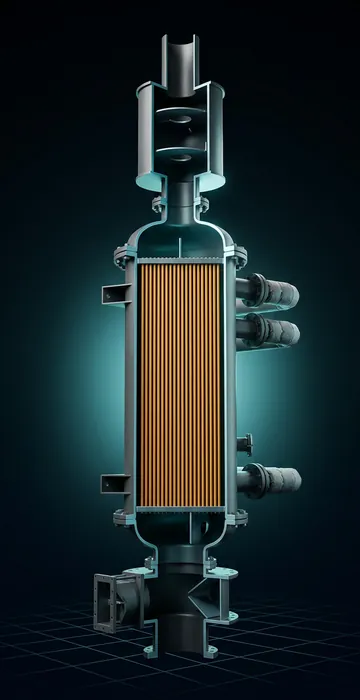
CHP is not free efficiency. It adds equipment, maintenance and complexity, and it ties the site's heat supply to the generator. Common concerns include:
- Higher upfront cost than a boiler plus a grid connection.
- Maintenance on engines or turbines, plus the heat recovery equipment.
- A need for backup heat and power when the CHP unit is down.
- Exposure to fuel prices, since the site now buys gas for both heat and power.
- Air permits for on-site combustion.
That fuel exposure is the one that surprises people. CHP economics depend on the spark spread, the gap between what electricity costs and what gas costs. If gas prices jump while power prices hold, savings shrink. Anyone building CHP should understand natural gas price risk and how to hedge it before signing up.
How CHP Is Sized
Most CHP systems are sized to the site's steady heat demand, not its peak electric load. That keeps the recovered heat in use, which is where the efficiency comes from. The grid or other generation covers any electric gap. Size the unit to the peak electric load instead and you may end up dumping heat through a radiator for most of the year, which turns CHP back into plain on-site generation.
Combined Heat and Power: Paying for Fuel Once and Using It Twice
Combined heat and power takes the heat that a normal plant throws away and puts it to work. It raises total efficiency from around 50% for separate heat and power to roughly 65% to 75%, cutting fuel use and emissions for the same outputs. It works best at sites with steady, simultaneous demand for heat and power.
If you are considering CHP, start with a year of hourly heat and electricity data. Find the steady heat load, size the system to that, and run the numbers at several gas and power prices. If the heat has a home every hour, CHP is hard to beat. If it does not, you are just running a generator with extra plumbing.