What Goes in an Energy Project Investor Deck? – Slides Developers Need
A good power project can still lose a room in ten slides. The site is right, the gas is there and the customer is real, but the deck spends six pages on the market and one line on who holds the land. Investors and lenders have seen hundreds of these. They know which questions kill a deal, and they want those answered before they read your vision statement. What goes in an energy project investor deck, and in what order?
An energy project investor deck should prove three things fast: the project can get built, it will get paid, and its risks are understood and covered. In order, that means a summary and the ask, then site control, power and fuel, interconnection, offtake, permits, schedule, cost and financing, the team and a frank risk slide. Keep market background short, show every number with its assumptions and use maps and renderings so people can picture what they are funding. Most decks run 12 to 20 slides, with an appendix for the detail.
What Do Investors Look for First?
Investors look first for whatever could stop the project cold. For an energy or data center power project, that usually means four questions:
- Do you control the site, or just have a handshake?
- Is there a firm path to fuel and to the grid or the customer?
- Who buys the output, for how long, at what price?
- What permits are needed, and which ones do you already hold?
A strong deck answers those in the first few slides. A weak one makes the reader hunt through the appendix. If I were reviewing a deck, I would want the summary slide to say plainly where each of those four stands today.
The Slide-by-Slide Outline
Here is an outline that works for most power generation, microgrid and behind-the-meter projects. Adjust the order to lead with your strongest point.
- Project summary and the ask: what, where, how big, how much money, for what.
- Site and site control: location map, acreage, ownership and the form of control (deed, lease or option).
- Power and fuel: technology, unit count, redundancy, fuel source and supply contract status.
- Interconnection or customer connection: grid study status or the private line to the customer.
- Offtake and revenue: who pays, contract length, pricing structure and credit quality.
- Permits and approvals: a table of each permit, agency, status and expected date.
- Schedule: milestones from financial close to commercial operation, with the critical path marked.
- Capital cost: sources and uses, major equipment and contingency.
- Financial summary: revenue, operating cost, cash flow and key returns, with assumptions shown.
- Team: who has done this before, and the key contractors and advisers.
- Risks and mitigants: a frank list, each with what reduces it.
- Next steps: what the money pays for and when.
How Should You Present Site Control and Permits?
Present them as facts with documents behind them. "Under option through a specific date, with extension rights" tells an investor far more than "site secured." Show a map with the parcel boundary, access roads, nearest gas line and nearest substation or customer.
For permits, a status table beats paragraphs. List each approval, the agency, whether it is filed, pending or issued, and the expected date. Air permits for gas generation, zoning or land use approvals, stormwater and any water rights usually appear. Mark anything on the critical path in a way the eye catches.
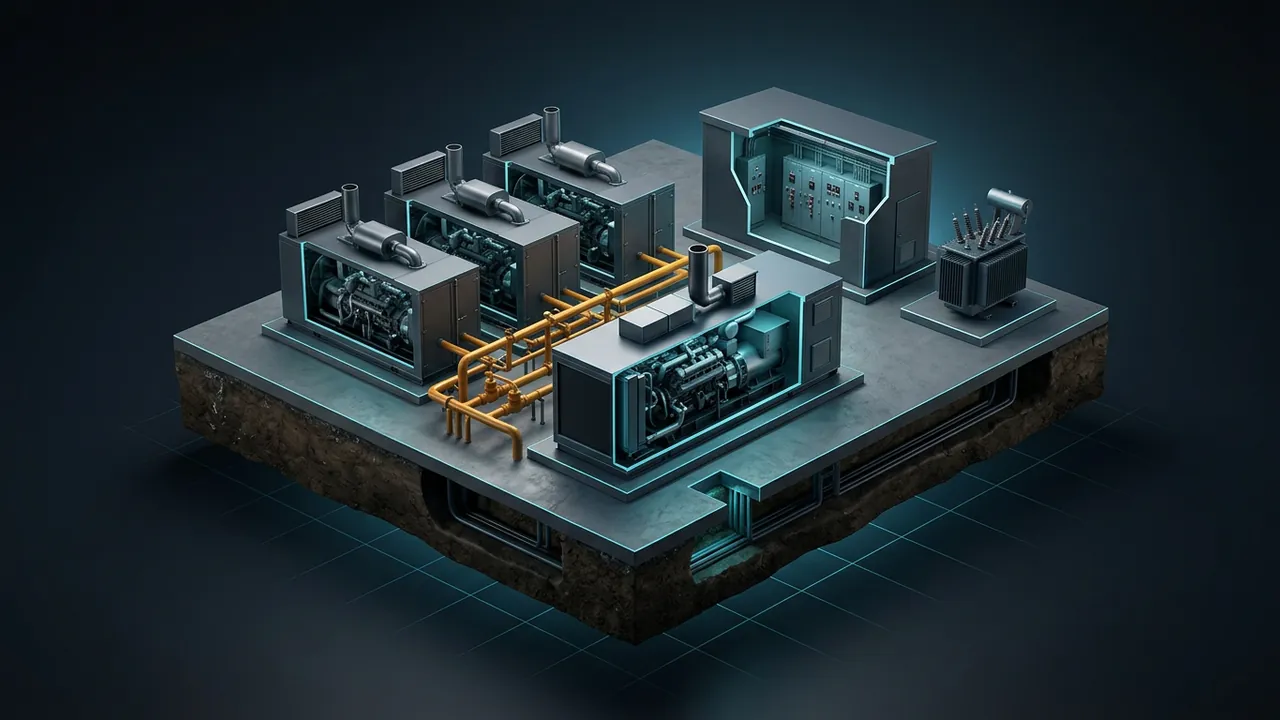
Visuals help here. A clear site plan rendering shows equipment placement, setbacks and screening, and it reassures investors that the project has been thought through to the point a planning board would accept it.
What Belongs on the Power, Fuel and Offtake Slides?
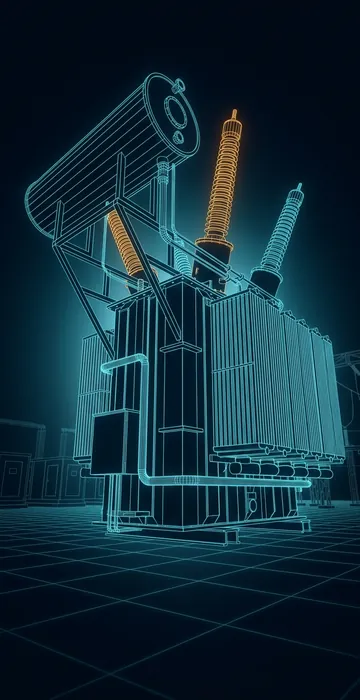
These slides carry the deal, so they need specifics. For power, show the technology, the number of units, the redundancy scheme (such as N+1) and a simple one-line diagram. For fuel, show where the gas comes from, the pipeline or lateral, the supply contract terms and whether supply is firm or interruptible.
For offtake, show the contract type and term. A physical power purchase agreement, for example, is a long-term contract to buy electricity from a specific generator. The U.S. EPA's overview of physical power purchase agreements notes they typically run 10 to 20 years, which is the kind of term lenders like to see. If revenue depends on merchant power prices instead, say so plainly and show the price assumptions.
A simple revenue example makes the logic visible. Here is a labelled illustration:
- Plant size: 20 MW.
- Expected output: 20 MW × 8,760 hours × 85% capacity factor = 148,920 MWh a year.
- Contract price: an assumed $60 per MWh.
- Annual revenue: 148,920 × $60 = about $8.9 million.
Every number in that chain should trace to a contract, a study or a stated assumption in the appendix.
How Do You Show Schedule, Cost and Financing?
Show the schedule as a milestone chart with the critical path highlighted. Long-lead equipment such as turbines, engines and transformers often drives the timeline, so show order dates and delivery windows.
For capital cost, use a sources and uses table: where the money comes from (equity, debt, grants or incentives) and where it goes (equipment, construction, interconnection, development costs, contingency). Be clear about whether costs are vendor quotes, engineer estimates or placeholders.
Lenders care about who carries construction risk. Many prefer a fixed-price, date-certain contract with a single contractor responsible for delivery. Akin Gump's checklist for bankable EPC contracts lists what lenders typically want, including a fixed price, a fixed completion date, delay and performance damages and performance security. Even outside solar, that list maps well to what a power project lender will ask. Our guide to the EPC contract explains those terms.
How Honest Should the Risk Slide Be?
Very honest. Experienced investors will find the risks anyway, and a deck that names them first earns trust. A short table works well: risk, likelihood, impact and mitigation.
Typical entries for a gas-fired or behind-the-meter project include fuel supply interruption, equipment delivery delays, permit challenges, customer credit, gas price swings and changes in regulation. For each one, show what you have done: a firm transport contract, an equipment slot reservation, a backup fuel plan, a parent guarantee or a price hedge.
If something is unresolved, say what it will take to resolve it and when. That is far better than silence.
What Goes in the Appendix?
The appendix holds the proof behind the summary slides. Investors who get serious will read it closely, and their engineers and lawyers will read it even more closely. Typical contents:
- Title, lease or option documents summarized, with key dates.
- Fuel supply and transport term sheets or contracts.
- Interconnection studies or the customer's power requirements letter.
- Equipment quotes, performance guarantees and heat rate curves.
- The full financial model assumptions, with a sensitivity table for fuel price, power price, capital cost and schedule delay.
- Permit applications and agency correspondence.
- Resumes of the core team and references from past projects.
A clean, well-labelled appendix also speeds up due diligence, which shortens the time to close. Messy backup material sends the opposite signal, even when the project itself is sound.
What Mistakes Sink Investor Decks?
The most common mistakes are easy to avoid once you see them:
- Too much market background and too little about this project.
- Numbers without assumptions, or returns without sensitivities.
- Confusing MW and MWh, or nameplate capacity with expected output.
- Vague site control ("in discussions") presented as secured.
- Pretty renderings that do not match the actual site plan.
- No clear ask: how much, in what form and for which milestones.
A deck is not legal or investment documentation, and it should not pretend to be. Your counsel and advisers handle the offering materials. The deck's job is to earn the next meeting.
Build the Energy Project Investor Deck Around What Could Go Wrong
Investors do not fund visions. They fund projects whose problems have already been found and handled. The deck that wins is the one that makes the reader's skeptical questions feel answered before they are asked.
Write the risk slide first, then build the rest of the deck to answer it. If every risk has a matching slide that shows how it is handled, you have a deck investors will read to the end.