Is Bitcoin Mining on Flare Gas Worth It? – How Operators Do It

On some lease roads in western North Dakota or West Texas, you pass the pump jacks and tanks, then a flare, and then something that does not look like it belongs: a shipping container humming with fans, cabled to a gas generator. Flare gas bitcoin mining has been showing up on well pads for several years now, pitched as a way to turn waste into money. If you are an operator or investor weighing one, you want the real picture, not the brochure. Is bitcoin mining on flare gas worth it, and how do operators do it?
Flare gas bitcoin mining can be worth it when the gas volume is steady enough to keep generators loaded for at least a year or two, the gas is cheap or free, and the mining equipment can be bought and moved at a sensible cost. The setup is simple: gas that would be flared feeds on-site generators, and the electricity runs containerized mining machines. Because mining can stop and start without harm, it can follow the gas. The risks are real, though. Bitcoin revenue swings with the market, wells decline, and raw gas can be hard on engines, so profits depend heavily on execution.
How Do Operators Set Up Flare Gas Bitcoin Mining?
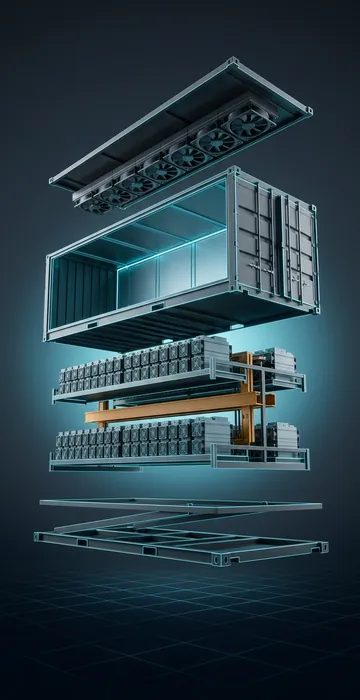
The physical setup is a small, portable power plant feeding a small, portable data center. A typical layout on the pad looks like this:
- A tie-in on the gas line from the separator or flare header, with the flare kept as a backup.
- A scrubber and sometimes a conditioning skid to knock out liquids and tame rich gas.
- One or more natural gas generators, often in the range of a few hundred kW to around 1 MW each.
- Switchgear and transformers to step power to the voltage the miners use.
- Mining containers holding racks of specialized computers called ASIC miners, cooled by fans or, in some designs, by liquid immersion.
- A satellite or cellular link, plus remote monitoring for both the engines and the miners.
Scale varies a lot. Data Center Dynamics reported in 2021 that one flare-gas computing company was running about 40 flare-powered modular data centers across North Dakota, Montana, Wyoming and Colorado, built from roughly 250 kW modules. That is the right mental picture: lots of small units spread over many pads, not one giant facility.
How Much Gas Does a Mining Site Need?
Less than you might think. Here is the math, assuming rich associated gas at 1,200 British thermal units per cubic foot (Btu/scf) and a small gas generator at a heat rate of 10,000 Btu per kilowatt-hour (Btu/kWh).
- Each thousand cubic feet (Mcf) of gas holds 1.2 million Btu (MMBtu).
- At 10,000 Btu/kWh, 1.2 MMBtu makes 120 kWh.
- So 1,000 Mcf per day makes 120,000 kWh per day, or 5 MW of steady power.
- If each miner and its share of fans and overhead draws about 3.5 kW, 5 MW runs roughly 1,400 machines.
The chart below applies the same assumptions to smaller flares. Your own gas analysis and engine specs will move these numbers, so treat them as a starting point. The per-machine version of this math is in our article on bitcoin mining gas consumption.
MW of generation at 1,200 Btu/scf gas and a 10,000 Btu/kWh heat rate
Model: MW = Mcf/d × 1.2 MMBtu/Mcf × 1,000,000 ÷ 10,000 Btu/kWh ÷ 24 h ÷ 1,000. Illustrative assumptions, not field data.
View the data
| Average power | |
|---|---|
| 100 Mcf/d | 0.50 MW |
| 250 Mcf/d | 1.25 MW |
| 500 Mcf/d | 2.50 MW |
| 750 Mcf/d | 3.75 MW |
| 1,000 Mcf/d | 5.00 MW |
Even a modest 250 Mcf/d flare can support over a megawatt. That is why bitcoin mining showed up on pads that were too small to interest a pipeline company.
Why Is Bitcoin Mining a Good Match for Flare Gas?
Because it is the rare load that does not mind being interrupted. A hospital or a traditional data center needs power every second of every day. A bitcoin miner just earns less while it is off. When the miner turns back on, it picks up where the network is, with no backlog to clear.
That matters on a well pad, where gas is anything but steady. Wells load up with liquids and surge, operators shut in for workovers, and volumes decline over months. The mining controls can switch miners off in blocks as gas pressure falls and back on as it recovers, keeping the generators loaded within their comfortable range. Engines generally run best near their rated load, so matching the load to the gas is a big part of keeping them healthy.
Portability is the other half. Containers and gensets ride on trucks. When a well declines or a gathering line finally arrives, the whole site can move to the next pad.
What Decides Whether It Makes Money?
Four things carry most of the weight:
- Mining revenue per machine. This moves with the bitcoin price, the total computing power competing on the network and transaction fees. The block reward also halves roughly every four years. Nobody can promise where those go, and this article does not try.
- Machine efficiency. Newer miners do more work per kWh. Older machines can fall below breakeven when revenue drops.
- Uptime on the gas. Every hour the generators are down or starved for gas is an hour of zero revenue against fixed costs.
- Equipment cost and life. Miners lose value fast as newer models arrive, so payback periods need to be short.
A single machine shows why cheap fuel matters. One miner drawing 3.25 kW uses 78 kWh a day. On the grid at an illustrative $0.06 per kWh, that is about $4.68 a day. On flare gas at 10,000 Btu/kWh, it burns 0.78 MMBtu a day; even at a gas price of $2 per MMBtu, that is about $1.56. The fuel savings are real, but they have to cover generator rental or purchase, maintenance, conditioning and the higher cost of operating in the middle of nowhere.
What Deal Structures Do Operators Use?
There are three common ways to split the work and the reward, and each puts risk in a different place:
- Gas sale. The mining company buys the gas from the operator at an agreed price per Mcf or MMBtu and takes all the mining risk. The operator gets a small, steady payment and less flaring.
- Revenue share. The mining company brings the equipment, and the operator takes a share of mining revenue instead of a fixed gas price. The operator gets upside when mining pays well and less when it does not.
- Operator-owned. The oil company buys or leases its own gensets and miners and runs them directly or through a contractor. It keeps all the revenue and all the headaches.
Whichever model you pick, the contract should spell out who owns which equipment, who pays for gas conditioning and maintenance, how the gas is measured, what happens when the well is shut in or connected to a pipeline, and how much notice either side needs to walk away. Operators also care a great deal about safety and site access, since a third-party crew will be working on their lease. Have energy counsel review it; this is general information, not legal advice.
What Are the Main Risks?
Gas decline is the big one. A shale well's output drops steeply in its first year or two. A site sized for today's flare may be half empty next year unless it can move or pull gas from nearby wells.
Then there is the engine. Rich, wet or sour gas can cause knock, deposits and corrosion if it is not conditioned properly. Dust, heat and cold are hard on both engines and miners, and a breakdown at a remote site means a long drive for a technician. Theft and vandalism happen too, so fencing and cameras are common.
Finally, contracts. The miner needs a deal with the operator for the gas and site access. Royalty owners may be owed on gas used this way, depending on the lease and state law. And state rules on flaring, measurement and engine air permits apply. None of this is a reason to walk away, but all of it belongs in the plan from day one.
Is Flare Gas Mining Better Than Flaring for Emissions?
Generally yes, though the size of the benefit is debated. Flares are assumed in many inventories to destroy about 98% of the methane they burn. A 2022 study published in Science and summarized by the University of Michigan found that flares in major U.S. basins averaged only about 91% effective, partly because some were unlit 3% to 5% of the time.
Engines burn gas in a closed, controlled chamber, so they usually destroy methane more consistently than an open flare in the wind, though they still let a little through. The engines also make useful electricity. The fair take is that routing flare gas to generators usually cuts methane compared with a poorly performing flare, and that the bigger win would be getting the gas into a pipeline where possible.
Why Do Oil Wells Have Flare Gas to Offer in the First Place?
Because oil is the prize and gas comes along for the ride. When associated gas has no gathering line or the system is full, operators flare it, within state limits. The reasons why oil wells flare gas range from pipeline timing to low gas prices and state rules. Understanding those reasons helps you guess how long a flare will last, which is the single most important number for a mining site.
Flare Gas Bitcoin Mining, Worth It If You Plan for the Hard Parts
Flare gas bitcoin mining works by turning gas that would be burned into electricity for portable miners that can follow the gas. It can pay when the gas is cheap and steady enough, the equipment is right-sized and mobile, and the operator and royalty questions are settled. It struggles when gas falls off faster than expected, when engines eat bad gas, or when mining revenue drops below the cost of running remote sites.
The to-do list is short, though not easy: get a gas analysis and a realistic decline forecast, size gensets and miners modestly, plan your next move before the first container lands, and stress-test the numbers against a low revenue case. Treat it as an oilfield operation with a computing load attached, not the other way around, and you will be asking the right questions.