How Much Gas Does a Bitcoin Miner Burn? – Mcf per Day per Machine
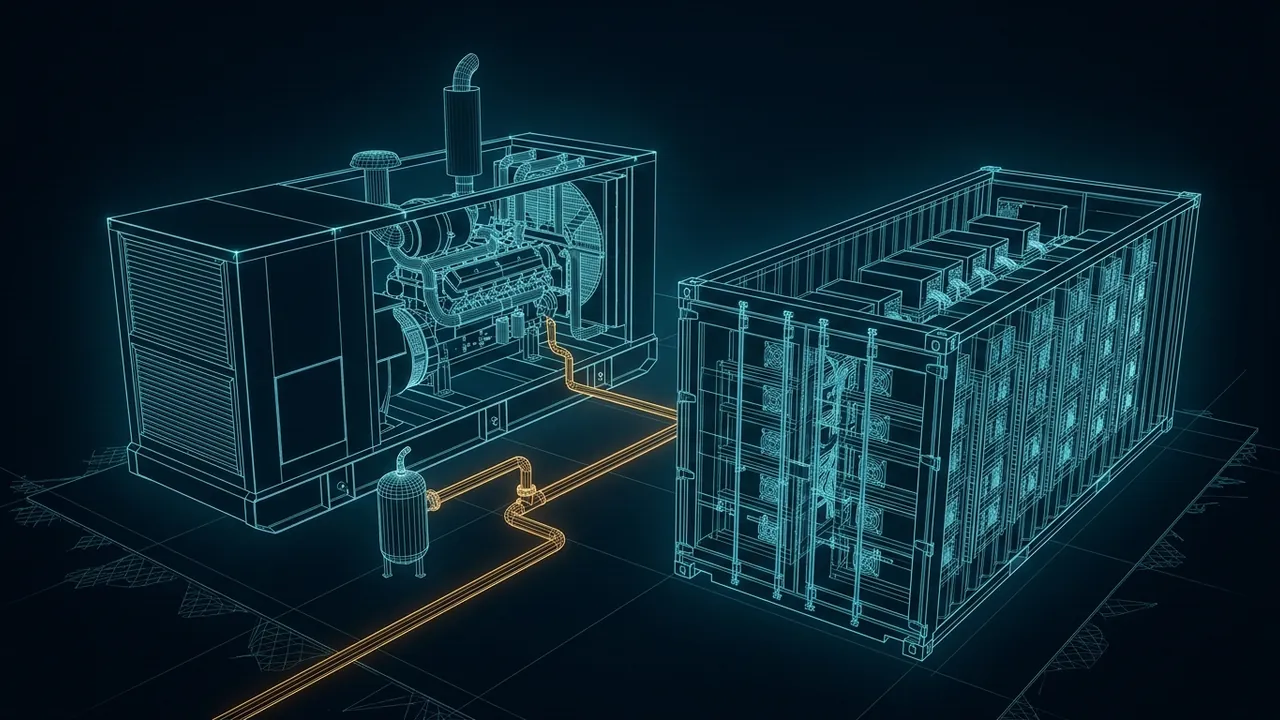
Somebody on a lease always asks it the same way: "If I hook up one of those mining machines, how much of my gas does it eat?" It is a fair question, and the answer is smaller than most people guess for one machine and bigger than they guess for a container full. Bitcoin mining gas consumption comes down to a few numbers you can work out on the back of a run ticket. So how much gas does a bitcoin miner burn per day?
A typical modern bitcoin miner drawing about 3 to 3.5 kW burns roughly 0.65 to 1.0 Mcf of natural gas per day when powered by an on-site generator. That range comes from the machine's power draw, a small allowance for site overhead, the generator's heat rate, and the gas's heating value. Flip it around and 1 million cubic feet per day (1 MMcf/d) of pipeline-quality gas can run something like 1,200 machines. Rich associated gas stretches further per cubic foot, while a worn or underloaded engine burns more. Your own numbers will shift, so work the math with your gas analysis and your engine's spec sheet.
How Much Power Does One Bitcoin Miner Use?
Modern ASIC miners (application-specific integrated circuits, built to do nothing but mine) commonly list power draw around 3 to 3.5 kW on their spec sheets. Older generations drew less power and did far less work per watt. Newer and liquid-cooled models can draw more.
That draw is close to constant. A miner runs flat out around the clock unless it is throttled or shut off. So daily energy is easy:
- 3.25 kW × 24 hours = 78 kWh per day per machine
A site also has overhead: container fans, networking gear, lighting, and electrical losses in transformers and cables. For air-cooled containers, an allowance of about 5% is a reasonable starting assumption. That takes our example machine to about 81.9 kWh per day at the generator.
How Do You Convert Power to Gas?
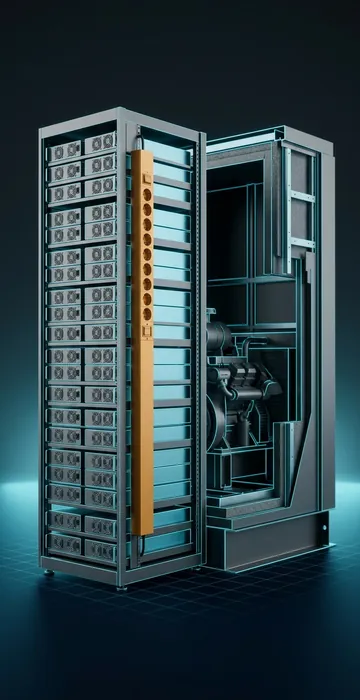
You use the generator's heat rate, which is how many British thermal units (Btu) of fuel it burns for each kWh it makes. The U.S. Energy Information Administration explains heat rate and power plant efficiency in simple terms: 1 kWh equals 3,412 Btu, so efficiency is 3,412 divided by the heat rate.
Small gas engines on a wellsite are not as efficient as big central power plants. The U.S. Environmental Protection Agency's Catalog of CHP Technologies puts reciprocating engines at about 27% to 41% electrical efficiency on a higher heating value basis, depending on size and design. In heat rate terms, that is roughly 8,300 to 12,600 Btu per kWh. Field gensets of a few hundred kilowatts tend to sit toward the middle or less efficient end of that range.
The Worked Example
Here are the inputs for one machine:
- Machine draw: 3.25 kW
- Daily energy with 5% overhead: 3.25 × 24 × 1.05 = 81.9 kWh
- Generator heat rate: 10,500 Btu per kWh (about 32.5% efficient)
- Fuel energy per day: 81.9 × 10,500 = 859,950 Btu, or about 0.86 MMBtu (million Btu)
- Gas heating value: 1,036 Btu per cubic foot, close to the U.S. average for pipeline gas
- Gas volume: 859,950 ÷ 1,036 = about 830 cubic feet, or 0.83 Mcf (thousand cubic feet) per day
So one machine burns a little under 1 Mcf per day. For one box, that is a rounding error on most flare meters. Line up a few hundred of them and it is a real gas contract.
What Range Should You Expect?
Change the inputs and the answer moves. Here are three cases on 1,036 Btu per cubic foot gas, each with the same 5% overhead:
| Case | Machine draw | Heat rate (Btu/kWh) | MMBtu per day | Mcf per day |
|---|---|---|---|---|
| Efficient engine | 3.0 kW | 9,000 | 0.68 | 0.66 |
| Middle case | 3.25 kW | 10,500 | 0.86 | 0.83 |
| Small or underloaded engine | 3.5 kW | 12,000 | 1.06 | 1.02 |
Rich gas changes the volume but not the energy. At 1,300 Btu per cubic foot, the middle case drops to about 660 cubic feet per day (859,950 ÷ 1,300). Same fuel energy, fewer cubic feet. Just remember rich gas may force the engine to derate, which can push the heat rate up and claw some of that back.
Try your own numbers in the calculator below. Enter the generator size in MW, your heat rate and your gas heating value, and it returns MMBtu and Mcf per day.
How Many Miners Can a Well Support?
Run the math backward from the gas. Using the middle case:
- Gas available: 1,000 Mcf per day (1 MMcf/d) at 1,036 Btu per cubic foot = 1,036 MMBtu per day
- Electricity: 1,036,000,000 ÷ 10,500 = about 98,700 kWh per day, or 4,110 kW average
- Miner load after 5% overhead: 4,110 ÷ 1.05 = about 3,915 kW
- Machines: 3,915 ÷ 3.25 = about 1,200 miners
A smaller flare of 100 Mcf per day would support about 120 machines, or a fraction of one container. That is why many wellsite mining projects gather gas from several wells or set up on pads with strong early production. In the Bakken, where North Dakota flaring once ran to a big share of all the gas produced, those rates made the math look especially tempting.
One more step people skip: engine count. If 4.1 MW of average load is split across engines rated around 1 MW each, you need at least five so each runs near, but not at, its limit. Add a sixth if you want to keep mining while one is down for an oil change. The spare engine burns no gas sitting idle, but it does cost money, so it is a business call, not a physics one.
What Throws the Numbers Off?
Real sites rarely match the spreadsheet exactly. The usual culprits:
- Part-load operation. An engine at half load burns more fuel per kWh than at full load.
- Heat and altitude. Hot air and thin air reduce engine output, so you may need more engine for the same machines.
- Gas swings. Associated gas rates and composition change with oil production and well work.
- Engine wear. Fouled plugs and worn parts raise the heat rate between overhauls.
- Machine settings. Many miners can be tuned to run lower power for better efficiency, or higher power for more output.
Good operators meter the gas into the engine and log the power out. After a few weeks, the actual heat rate is sitting right there in the data, and planning gets a lot more honest.
Bitcoin Mining Gas Consumption Is Under 1 Mcf a Day per Box
How much gas does a bitcoin miner burn? Roughly 0.65 to 1.0 Mcf per day for a 3 to 3.5 kW machine on a typical field generator, and about 1,200 machines per MMcf/d of pipeline-quality gas. The math is simple: kW times 24 hours, plus overhead, times heat rate, divided by heating value.
Before buying machines or engines, get a lab gas analysis, a production forecast for the wells and the heat rate curve for the genset you plan to use. Then size the site for the gas you will have in a year, not just the gas flaring today.