Can Geothermal Power Data Centers? – Enhanced Geothermal Explained
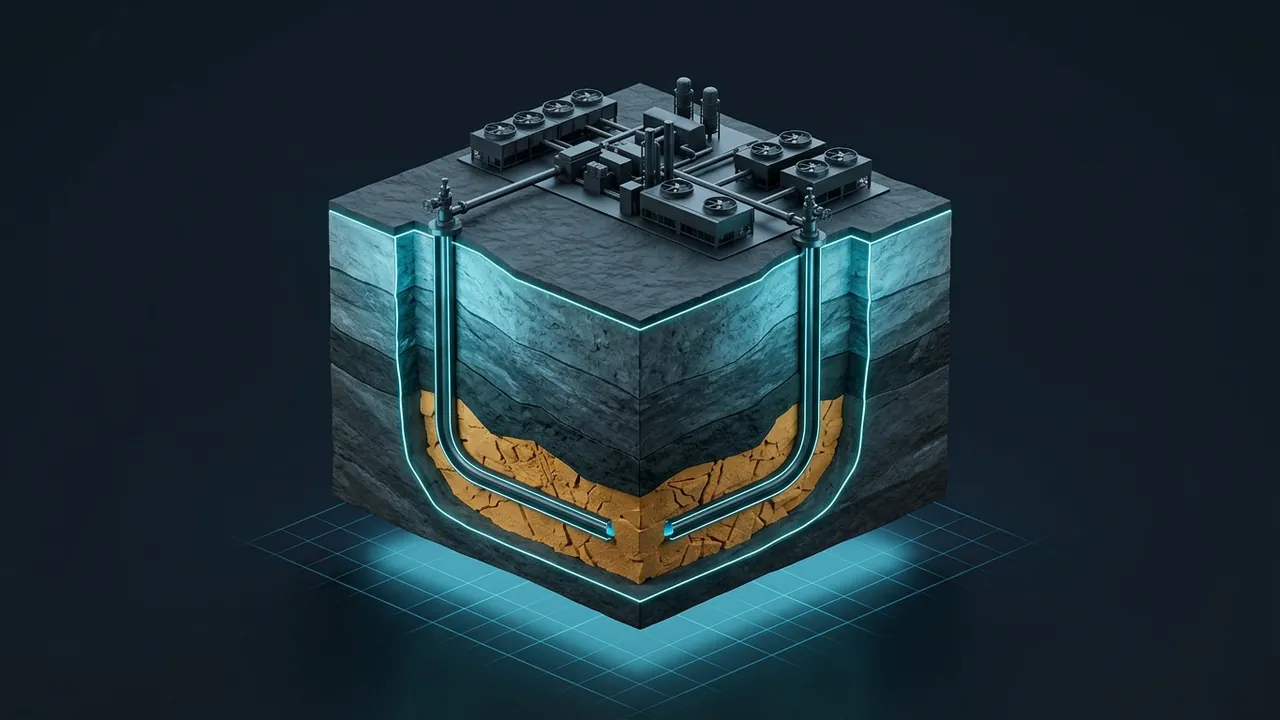
Data center developers keep asking for the same impossible-sounding thing: clean power that runs every hour of the year and doesn't depend on the weather. Wind and solar can't do that alone. Nuclear can, but new reactors are years away. Then there's the heat sitting under our feet, which never clocks out. Can geothermal power data centers, and is enhanced geothermal the thing that finally makes it practical?
Yes, geothermal can power data centers, but only in certain places and at a modest scale for now. A geothermal data center would draw on a power plant that turns underground heat into steady electricity, day and night, with almost no fuel cost and very low emissions.
Conventional geothermal needs rare natural reservoirs of hot water and permeable rock, which mostly exist in the western United States. Enhanced geothermal systems (EGS) use oilfield drilling and fracturing methods to create reservoirs in hot rock that lacks natural flow, which widens the map considerably. The first commercial-scale EGS plants are now under construction, with tech companies signing long-term contracts for their output.
How Does Geothermal Power Work?
Geothermal power works by pumping hot fluid up from deep wells, using its heat to spin a turbine, and sending the cooled fluid back underground through injection wells. The basic idea is a heat engine, just like a gas plant, except the fire was lit by the planet billions of years ago.
There are two main plant types worth knowing:
- Flash plants: Very hot, pressurized water from the reservoir flashes to steam when pressure drops at the surface, and that steam drives a turbine directly. These suit the hottest resources.
- Binary plants: Moderately hot brine passes through a heat exchanger and boils a second working fluid with a lower boiling point, which then drives the turbine. The brine never touches the turbine and goes back into the ground. Most newer and lower-temperature projects use binary designs.
Because the heat source doesn't care about clouds, wind or seasons, a well-run geothermal plant can produce power around the clock. That's the whole appeal. Its output is firm, meaning grid planners and data center operators can count on it the way they count on a gas or nuclear unit.
Why Would a Data Center Want Geothermal?
A data center wants geothermal because it matches the load shape. Servers draw roughly the same power at 3 a.m. as at 3 p.m., and geothermal produces roughly the same power at both hours too. Few clean resources can say that.
- Hourly clean energy: Companies chasing round-the-clock carbon-free goals can't get there with solar alone. A geothermal contract covers the night hours that solar leaves empty.
- No fuel price risk: Once the wells are drilled, the "fuel" is free. Costs are front-loaded into drilling and construction, which makes long fixed-price contracts possible.
- Small surface footprint: A geothermal plant uses far less land per MW than a solar farm with the same annual output, since it runs nearly all the time.
- Low emissions: Binary plants in particular emit very little, since the brine stays in a closed loop.
Here's how I'd put it: the real selling point isn't that geothermal is green. Plenty of things are green. It's that geothermal is green and boring in the best sense, with a flat output that doesn't need batteries to look like baseload.
What Is Enhanced Geothermal?
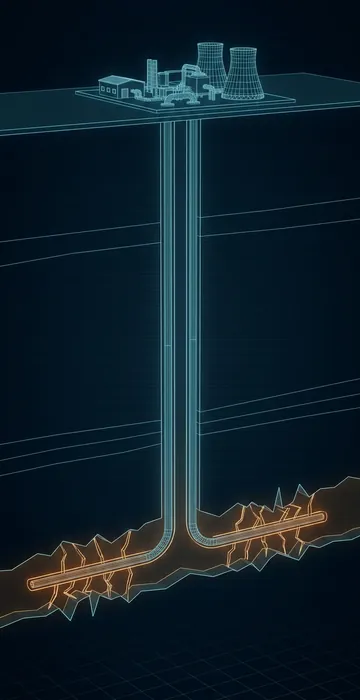
Enhanced geothermal is a way to build an artificial reservoir in hot, dry rock that doesn't naturally let water flow through it. Engineers drill into rock that is hot enough, pump fluid down under pressure to open or widen fractures, and then circulate water between an injection well and one or more production wells. The water picks up heat as it moves through the fractured rock and comes back up hot.
How EGS Borrows From the Shale Patch
The modern push for EGS leans on tools the oil and gas industry perfected in shale: long horizontal wells, multistage stimulation and better drill bits. Instead of a single vertical well hoping to hit a natural fracture, an EGS developer can drill parallel horizontal laterals and create a planned fracture network between them. The U.S. Department of Energy (DOE) has funded a field laboratory called Utah FORGE near Milford, Utah, specifically to test these methods in hot granite.
That matters for siting. Conventional geothermal needs heat, water and natural permeability in the same spot. EGS mostly needs heat at a drillable depth. Deeper drilling reaches heat in more places, which is why the DOE's GeoVision analysis found US geothermal could reach 60 GW by 2050, and why its later Enhanced Geothermal Shot work raised that potential to about 90 GW.
Is Anyone Actually Building a Geothermal Data Center Deal?
Yes, and the clearest example involves Google and Fervo Energy. In 2024 the two announced a 115 MW arrangement in Nevada, delivered through the local utility under a special clean energy tariff. In September 2026, according to EnergyTech's report on the expanded partnership, Google signed a 396 MW power purchase agreement tied to Fervo's planned 500 MW Cape Station in Utah, whose first 100 MW phase is under construction.
Notice the structure. These deals don't put a geothermal plant inside the data center fence. The plant sits where the heat is, the power moves over the grid, and the contract matches it to the buyer's load. That's how most geothermal supply to data centers will work, at least at first.
A true behind-the-meter geothermal campus, where the servers sit next to the wells, is possible in places like Nevada or Utah. It would need land, transmission for backup and a buyer willing to locate where the rocks are rather than where the fiber and customers already are.
How Many Wells Would a Geothermal Data Center Need?
A geothermal data center of meaningful size would need dozens of wells, and the math shows why. Walk through a made-up case with round numbers, not data from any real project.
- Data center: 100 MW of IT load at a power usage effectiveness (PUE) of 1.25 means 100 × 1.25 = 125 MW at the facility.
- Add margin for maintenance and well decline: plan for about 140 MW of net geothermal output.
- One production well flows 100 kg of brine per second at 200 °C, and the plant cools it to 80 °C. Heat delivered = 100 kg/s × 4.3 kJ/kg·°C × 120 °C ≈ 51,600 kW, or about 52 MW thermal.
- A binary plant at these temperatures might convert roughly 12% of that heat into net electricity: 52 × 0.12 ≈ 6 MW per production well.
- Wells needed: 140 ÷ 6 ≈ 23 production wells, plus injection wells to return the brine, often a dozen or more.
Real numbers vary a lot with temperature, flow rate and depth, and good EGS wells may beat this example. Still, the lesson holds: each well is a multimillion-dollar drilling job, and a 100 MW campus is a serious drilling program.
What Are the Downsides of Geothermal for Data Centers?
The downsides are geography, upfront cost, time and a few technical risks that come with pumping fluid into deep rock.
- Location: The best resources are in the West, especially Nevada, Utah and California. Deeper EGS widens the map, but heat at affordable depth still isn't everywhere.
- Drilling risk: You don't fully know how productive a well is until you drill and test it. Early wells can disappoint, and that risk lands on the developer before any power is sold.
- Timeline: Exploration, permitting (often on federal land), drilling and construction take years. Geothermal is rarely the fast answer for a site that needs power next year.
- Induced seismicity: Injecting fluid under pressure can trigger small earthquakes. An EGS project in Basel, Switzerland, was halted in 2006 after induced tremors. Modern projects use seismic monitoring and "traffic light" injection rules to manage this.
- Cooling and water: Flash plants use cooling towers; binary plants in dry areas use air-cooled condensers with big fan arrays that lose output on hot afternoons.
How Does Geothermal Compare to Other Firm Clean Power?
Geothermal is one of a short list of clean resources that can run around the clock. Each has a different catch.
| Option | Runs 24/7? | Main catch |
|---|---|---|
| Geothermal (conventional or EGS) | Yes | Site-limited, drilling risk, multiyear development |
| Nuclear (existing plants, future small modular reactors) | Yes | New reactors are years away; existing output is already spoken for |
| Gas with carbon capture | Yes | High capital cost and the need for CO2 pipelines and storage |
| Hydrogen | Yes, if fuel is stored | Expensive clean hydrogen and difficult storage |
| Solar or wind plus batteries | Only with large storage and backup | Batteries cover hours, not long cloudy or calm stretches |
For backup and peak duty, some operators are also testing a hydrogen generator instead of diesel, which fills a different role than geothermal's steady baseload. In practice, large campuses will likely blend several of these rather than bet on one.
Geothermal Data Center Power Follows the Heat
So, can geothermal power data centers? Yes. A geothermal data center contract gives a buyer clean electricity with a flat, around-the-clock profile that wind and solar can't match without heavy storage. Enhanced geothermal pushes the resource beyond a handful of natural hot spots by using shale-style drilling to manufacture reservoirs.
The limits are just as real. Development takes years, each well carries drilling risk, and the best rocks are in the West. Expect geothermal to supply hundreds of MW to data centers over the next several years, mostly through grid-delivered power purchase agreements, not to replace gas or nuclear across the board.
For a buyer, the practical move depends on the map. In Nevada, Utah and nearby states, ask geothermal developers about contract terms now, because the best early output gets committed years ahead. Elsewhere, the realistic path is a grid-delivered contract from a western project, which helps with hourly clean energy goals but not with local power supply.