Why Are Tech Companies Buying Nuclear Power? – Restarts, Uprates, SMRs
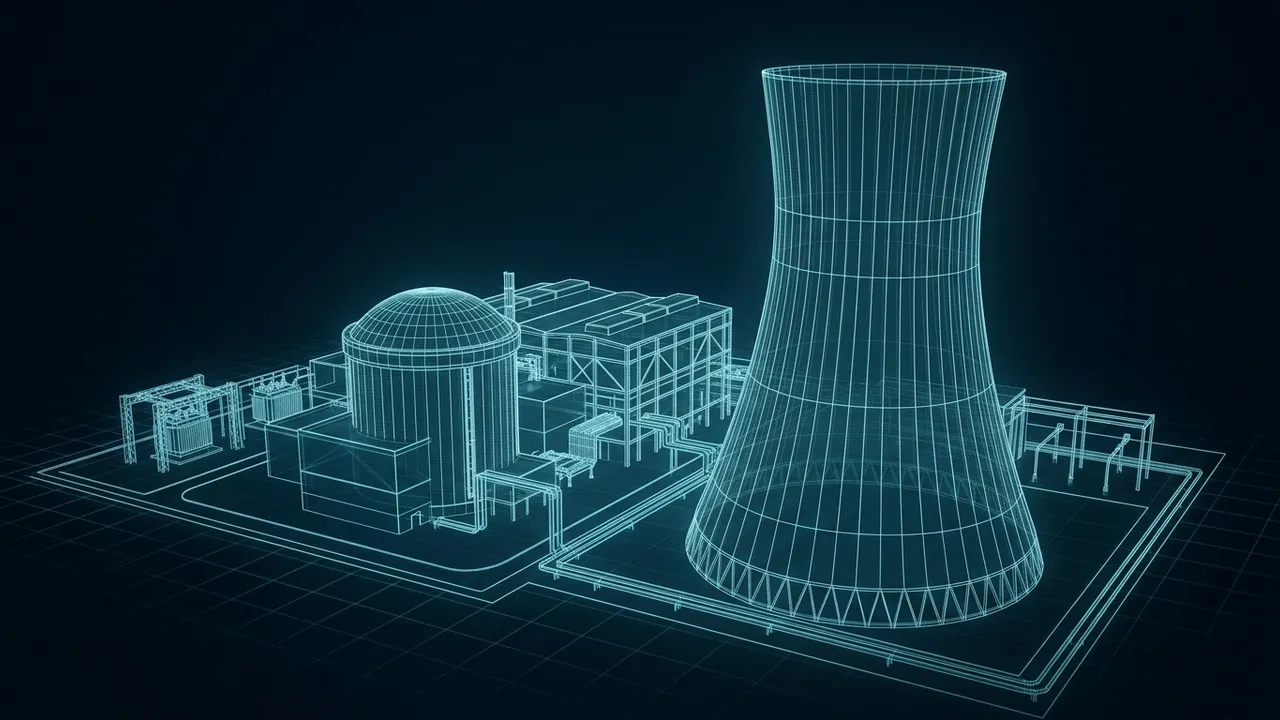
The big clean energy story for tech companies used to be wind and solar contracts. Then the headlines changed. A shuttered reactor at Three Mile Island is getting a second life to serve Microsoft. Amazon signed for nearly 2 GW from a Pennsylvania nuclear plant. Google is backing a new reactor company. Nuclear power data centers went from a niche idea to a board-level strategy in about two years. Why are tech companies suddenly buying nuclear power, and what are they actually getting?
Tech companies are buying nuclear power because it's one of the few sources that delivers large amounts of carbon-free electricity around the clock, which matches the steady, growing load of AI data centers. They're pursuing three paths: restarting recently closed reactors, paying to increase output at existing plants (uprates) and contracting for future small modular reactors (SMRs).
Existing plants offer power within a few years, while SMRs are a 2030s bet. The deals have also sparked fights over whether data centers should connect directly to nuclear plants and what that means for other grid customers, a debate federal regulators are still working through.
Why Does Nuclear Appeal to Data Centers?
Nuclear appeals to data centers because it runs almost all the time and emits no carbon while doing it. US reactors typically run at capacity factors above 90%, higher than any other major power source. A data center's load is also flat and constant, so the two shapes match well.
Put a hypothetical reactor through the numbers:
- Reactor: 835 MW
- Assumed capacity factor: 93%
- Yearly output: 835 × 8,760 × 0.93 = about 6.8 million MWh
- Equivalent steady supply: 6,800,000 ÷ 8,760 = about 776 MW, every hour of the year
To produce the same yearly energy from solar at a 25% capacity factor, you'd need about 6,800,000 ÷ 2,190 = roughly 3,100 MW of panels. Using the National Renewable Energy Laboratory's estimate of about 7.9 acres per MW for large solar plants, that's around 24,500 acres, plus storage to cover nights. A reactor sits on a fraction of that land.
Clean energy goals add to the pull. Many tech companies want carbon-free power every hour, not just on an annual average, and nuclear helps with the hours when wind and solar can't.
Path 1: Restarting Closed Reactors
Restarting a closed reactor is the fastest way to add new nuclear output, because the plant, the site and the transmission already exist. The limit is that only a few recently closed plants are candidates.
The highest-profile example is Three Mile Island Unit 1. Constellation announced in September 2024 a 20-year power purchase agreement with Microsoft to restart the roughly 835 MW unit, renamed the Crane Clean Energy Center, with an initial target of 2028. Constellation has since worked to pull the restart forward to 2027. The unit had closed in 2019 for economic reasons.
Restarts still need NRC approval, equipment refurbishment and staff. But compared with building new, they're quick, and the buyer gets a clear story: this power wouldn't exist without the contract.
Path 2: Buying Output From Existing Plants and Uprates
The second path is buying power from plants that are already running, often with investments to increase their output. That's faster still, but it raises a fair question: if a data center takes power that was already flowing to the grid, who replaces it?
The Talen Energy and Amazon partnership at the Susquehanna plant in Pennsylvania shows how this evolved. Amazon first bought a data center campus next to the plant. Then, according to World Nuclear News, the companies signed a new agreement in June 2025 for 1,920 MW of output through 2042, after federal regulators in late 2024 declined to approve an expanded arrangement for serving more co-located load.
Uprates help answer the "who replaces it" question. An uprate is an NRC-approved increase in a reactor's licensed power, achieved through better measurement, equipment upgrades or larger modifications. Each adds real new megawatts at an existing site, and tech buyers have shown interest in paying for them.
Path 3: Contracting for Small Modular Reactors
The third path is signing up for reactors that don't exist yet. In October 2024, Google announced an agreement with Kairos Power for up to 500 MW of small modular reactors, with the first unit targeted by 2030 and more through 2035.
These deals help reactor developers raise money and build an order book. For the buyer, they're a long-term hedge. The first US construction permit for a BWRX-300 SMR, issued to the Tennessee Valley Authority in September 2026, shows the industry moving, but commercial SMR output at scale is still years away.
How Fast Can Each Nuclear Path Deliver Power?
The three paths deliver power on very different clocks. Here's a rough comparison based on the deals and milestones described above:
| Path | Example | Rough time to power | Adds new supply? |
|---|---|---|---|
| Contract existing output | Talen and Amazon at Susquehanna | Immediate to a few years | No, reallocates existing output |
| Uprate existing reactor | NRC-approved power increases | A few years | Yes, modest amounts |
| Restart a closed reactor | Crane (Three Mile Island Unit 1) | About three to four years (2024 deal, 2027 to 2028 target) | Yes |
| New small modular reactors | Google and Kairos Power | 2030 at the earliest, mostly later | Yes |
The trade-off is plain. The fastest option adds the least new clean power to the grid, and the option that adds the most takes the longest. Big buyers are doing all of them at once for exactly that reason.
What Does a Nuclear Deal Look Like on Paper?
Most nuclear deals for data centers are long-term power purchase agreements. The buyer commits to take or pay for a set amount of output, often for 20 years, as in the Crane agreement. The price may be fixed, escalate on a schedule or float with some index.
The buyer usually receives the plant's environmental attributes, which lets it claim the power as carbon-free. Some deals also involve the buyer helping finance restarts or uprates, which gives the plant owner the confidence to spend hundreds of millions of dollars before any new power flows.
Where the power is delivered matters too. In a front-of-meter deal, the plant sells into the grid and the buyer receives power through normal transmission service. In a behind-the-meter deal, the data center connects at the plant itself. That choice drives most of the regulatory controversy.
Should Data Centers Connect Directly to Nuclear Plants?
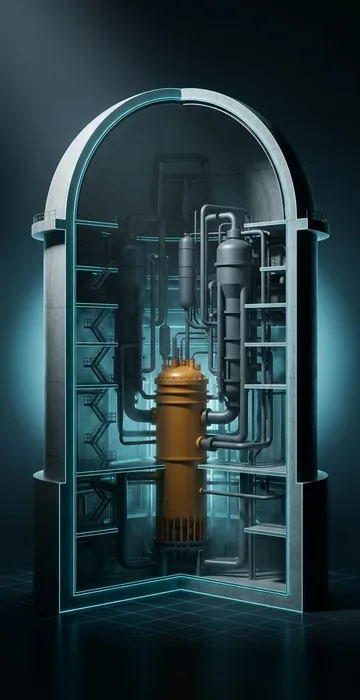
This is the hottest question in the whole topic, and reasonable people disagree. Connecting a data center directly to a nuclear plant, behind the meter, can be fast and simple for the buyer. It can also shift costs to everyone else on the grid.
- Supporters say co-location uses existing sites and infrastructure, speeds up projects and keeps reactors financially healthy.
- Critics say a co-located data center still relies on the grid for backup and stability, so it should pay for transmission like other customers. They also worry that pulling existing clean power off the grid raises prices and emissions elsewhere.
Federal regulators have stepped in. In December 2025, FERC found PJM's rules for co-located load unjust and unreasonable and ordered new transmission service options for such arrangements, according to a Jones Day summary. The fight over the data center co-located with power plant model has its own article if you want the details.
My take: the policy direction is toward co-located loads paying something for the grid services they use. That shrinks the cost advantage of behind-the-meter deals and makes front-of-meter structures, where the buyer pays normal transmission charges, look more attractive by comparison.
Is Nuclear Power Expensive for Data Centers?
It depends on whether the plant is old or new. Existing reactors have paid off much of their construction cost, so their power can be competitive. New nuclear is expensive. Lazard's 2025 levelized cost analysis put unsubsidized new nuclear at roughly $141 to $220 per MWh, higher than most of the ranges it gave for new wind, solar or combined-cycle gas.
Tech companies are willing to pay premiums for firm, clean power, especially when the alternative is waiting years for grid capacity. But premiums have limits, and first-of-a-kind SMR costs will be watched closely.
What Are the Risks for Buyers?
Buyers face several risks with nuclear deals:
- Schedule: restarts and new builds can slip.
- Regulation: co-location rules are still being written.
- Cost: new reactors have a history of overruns.
- Public perception: some communities and advocates object to tech companies claiming existing clean power.
- Fuel supply: advanced reactors need fuel types with limited supply chains.
Does Nuclear Have Competition for Firm Clean Power?
Nuclear isn't the only firm, clean option, but it's the largest. Gas with carbon capture, long-duration storage and geothermal are all in the conversation. Geothermal in particular has drawn tech company deals in the western US. Whether a geothermal data center makes sense depends heavily on geology.
Most large buyers are building portfolios: wind and solar for cheap energy, batteries for shifting, and firm sources like nuclear or geothermal to fill the gaps.
Nuclear Power Data Centers: A Bet on Steady Output
Tech companies are buying nuclear power because it delivers what data centers need most: huge amounts of carbon-free electricity, every hour, from a small footprint. Restarts and existing plants deliver it this decade. Uprates add margin. SMRs are the long-term bet.
For anyone weighing nuclear power for data centers, the key questions are timing, cost and fairness to other grid customers. If you need power before 2030, look at existing plants and restarts, and price both front-of-meter and co-located structures under current rules. If your horizon is longer, an SMR agreement can sit in the portfolio, as long as the plan still works if that first reactor arrives late.