Why Do Waha Gas Prices Go Negative? – What It Means for Power
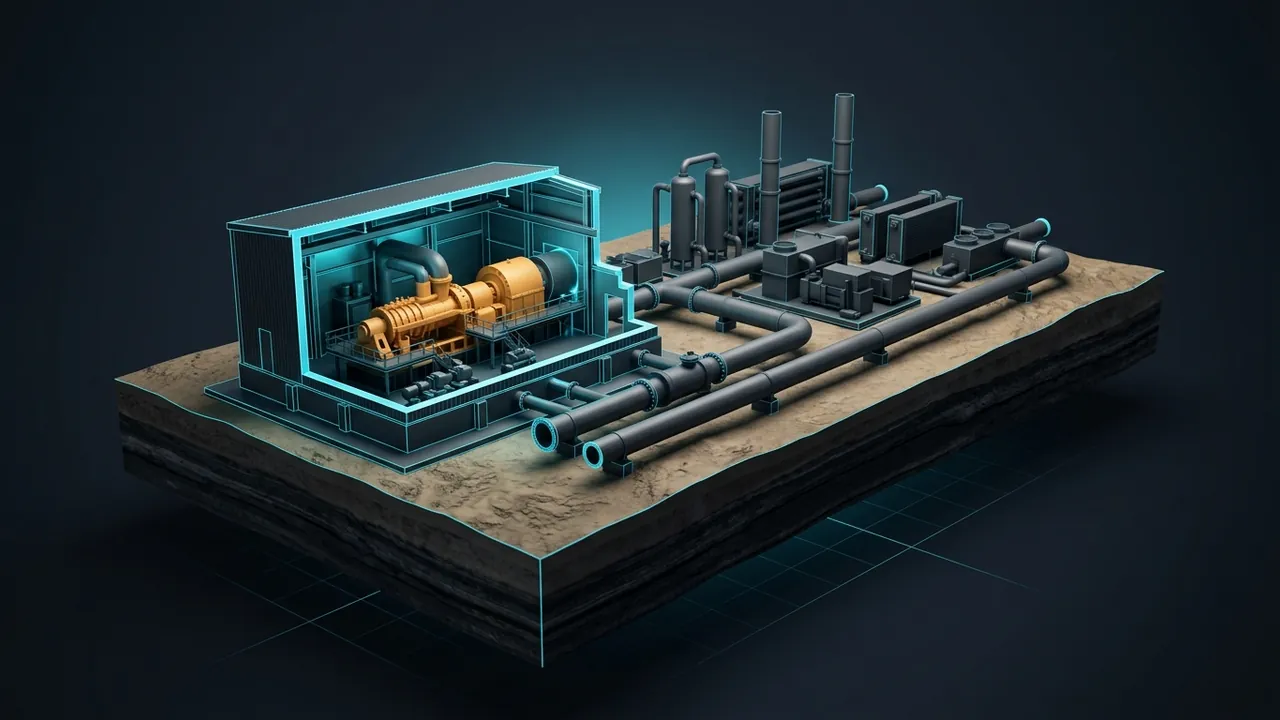
Imagine selling something and paying the buyer to take it. In most businesses, that would mean something has gone badly wrong. In the Permian Basin gas market, it happens from time to time. The Waha hub in far West Texas has posted prices below zero on a number of days, and every time it does, people outside the oilfield scratch their heads. Why do Waha gas prices go negative, and what does it mean for anyone burning gas to make power?
Waha negative prices happen when more gas shows up at the hub than the pipelines leaving the Permian Basin can carry, and producers would rather pay someone to take it than shut in their oil wells. Most Permian gas is associated gas, a byproduct of oil drilling, so it keeps flowing as long as oil is profitable. When takeaway pipelines are full, or a major line goes down for maintenance, the gas has nowhere to go. Sellers then cut their price until someone takes the gas, even below zero. For power plants in the basin, that means occasional very cheap fuel, not a business plan.
What Is the Waha Hub?
Waha is a natural gas trading hub in Pecos County, West Texas, in the heart of the Permian Basin. Several intrastate pipelines meet there, and gas changes hands among producers, marketers and shippers. The daily price set at Waha is the benchmark for most Permian gas.
Prices across the country are usually quoted against Henry Hub in Louisiana. The difference between a local hub and Henry Hub is called basis. At Waha, basis is usually negative, meaning gas is cheaper than at Henry Hub, because Permian gas has to travel a long way to reach big markets on the Gulf Coast and beyond. When pipelines get tight, that discount can widen enough to drag the Waha price itself below zero.
Why Does the Permian Produce So Much Gas It Cannot Move?
The Permian is first and foremost an oil basin. Producers drill there for crude, and the gas comes along for the ride. The EIA's 2019 analysis of associated gas found that about 51% of Permian gas production in 2018, roughly 5.8 billion cubic feet per day (Bcf/d), was associated with oil. That kind of associated gas comes up with the crude whether anyone wants it or not, which is why it is so hard to turn off.
That is the key. A producer looking at an oil well does not stop because gas prices dropped. The oil pays the bills. As long as the oil is worth more than the cost of getting rid of the gas, drilling and production continue. Gas growth follows oil growth, not gas prices, and sometimes it outruns the pipes.
What Triggers Negative Prices at Waha?
Negative prices usually need more than just a lot of gas. Most episodes trace back to a squeeze on takeaway capacity. Common triggers include:
- Pipeline maintenance that temporarily cuts how much gas can leave the basin.
- Production growth that runs ahead of new pipeline construction.
- Processing plant outages, since raw gas must be processed before most pipelines accept it.
- Weak demand downstream on mild days, when Gulf Coast buyers need less gas.
Argus Media reported a clear example in October 2022, when Waha spot gas went negative for a second day, at minus 57 cents per million British thermal units (MMBtu), as maintenance on the Gulf Coast Express pipeline cut takeaway. Argus noted that because most Permian gas is associated with oil, output does not slow when gas prices fall. Waha had also posted negative daily prices on several days in 2019, before a wave of new pipelines came online.
Why Not Just Flare It or Store It?
Flaring is the old release valve, but Texas limits it. The Railroad Commission's Statewide Rule 32 allows flaring only for limited periods without an exception, and longer-term flaring needs Commission approval. Storage near the Permian is limited, so there is little room to park surplus gas. Shutting in oil wells costs real money, and restarting some wells can be tricky. Faced with those choices, paying a buyer to take gas for a day or two is often the least bad option.
How Do New Pipelines Change Waha Prices?
New takeaway capacity is the cure, at least for a while. Between 2019 and 2021, several large pipelines came online to carry Permian gas to the Gulf Coast, including Gulf Coast Express in 2019, then Permian Highway and Whistler in 2021, each designed to move about 2 Bcf/d. Each addition eased the squeeze and pulled Waha prices closer to Henry Hub.
Then production kept growing, the new pipes filled up and the cycle started again. That is the pattern to understand. Waha discounts tend to come in waves: wide when pipelines are full, narrower after new capacity opens, then wide again as drilling catches up. Anyone counting on cheap Permian gas should plan for both phases.
What Do Waha Negative Prices Mean for Power Generation?
For a gas-fired plant inside the basin, buying on the Waha daily index can mean very cheap fuel during squeeze periods. Consider an example 10 MW engine plant with a heat rate of 9,000 Btu/kWh:
- Daily fuel: 10,000 kW × 9,000 Btu/kWh × 24 hours = 2,160 MMBtu.
- At a positive $2.00 per MMBtu: 2,160 × $2.00 = $4,320 per day in fuel cost.
- At minus $0.57 per MMBtu, the October 2022 Argus print: 2,160 × −$0.57 ≈ −$1,231, meaning the plant is paid about $1,231 that day to take the gas.
That looks great on paper. In practice, negative days are scattered and short, and most buyers do not purchase all their gas at the daily index. Pipeline and lateral charges still apply. And a plant built for negative prices still needs fuel on the many normal days and through the occasional winter price spike.
Who Benefits Most
Flexible loads gain the most. A bitcoin mining site or other interruptible load can run flat out when gas is nearly free and throttle down when it is not. A data center with uptime commitments benefits more modestly, because it needs fuel every hour regardless of price. For firm loads, the smarter play is usually a supply contract priced off Waha with sensible floors and caps, rather than riding the daily market.
Power Prices Go Negative Too
West Texas has its own version of the same problem on the electric side. Wind and solar in the region can produce more power than transmission lines can move east, which pushes local power prices below zero in some hours. A site that can choose between running its own gas generators and buying cheap grid power has two ways to capture surplus energy.
How Should Operators Plan Around Waha Swings?
Planning starts with keeping equipment ready when prices are best. Negative pricing often lines up with pipeline maintenance seasons, typically the mild spring and fall months when gas demand is lower. If your generators are down for overhauls during those windows, you miss the cheapest fuel of the year. That makes gas generator maintenance scheduling part of fuel strategy, not just a shop task. Many operators try to finish major work before the shoulder seasons and keep spare capacity available to run hard when gas is cheap.
Contracts matter just as much. Decide how much exposure to the daily Waha index you want, set floors and caps where it makes sense and keep firm transport for the volumes you cannot live without.
Waha Negative Prices: A Symptom of Too Much Gas and Too Little Pipe
Why do Waha gas prices go negative? Because Permian gas production follows oil, not gas prices, and when it outruns the pipelines leaving the basin, sellers have to pay buyers to keep their oil wells flowing. Maintenance, processing outages and mild weather make the squeeze worse, and new pipelines ease it until production catches up again.
For power projects in the basin, Waha negative prices are a real but occasional bonus. Build around reliable supply, keep some exposure to the daily market if your load can flex and schedule maintenance so your equipment is ready when gas is almost free. In West Texas, cheap fuel comes in waves. The operators who do best are the ones ready to ride them.