What Is WUE? – Water Usage Effectiveness for Data Centers
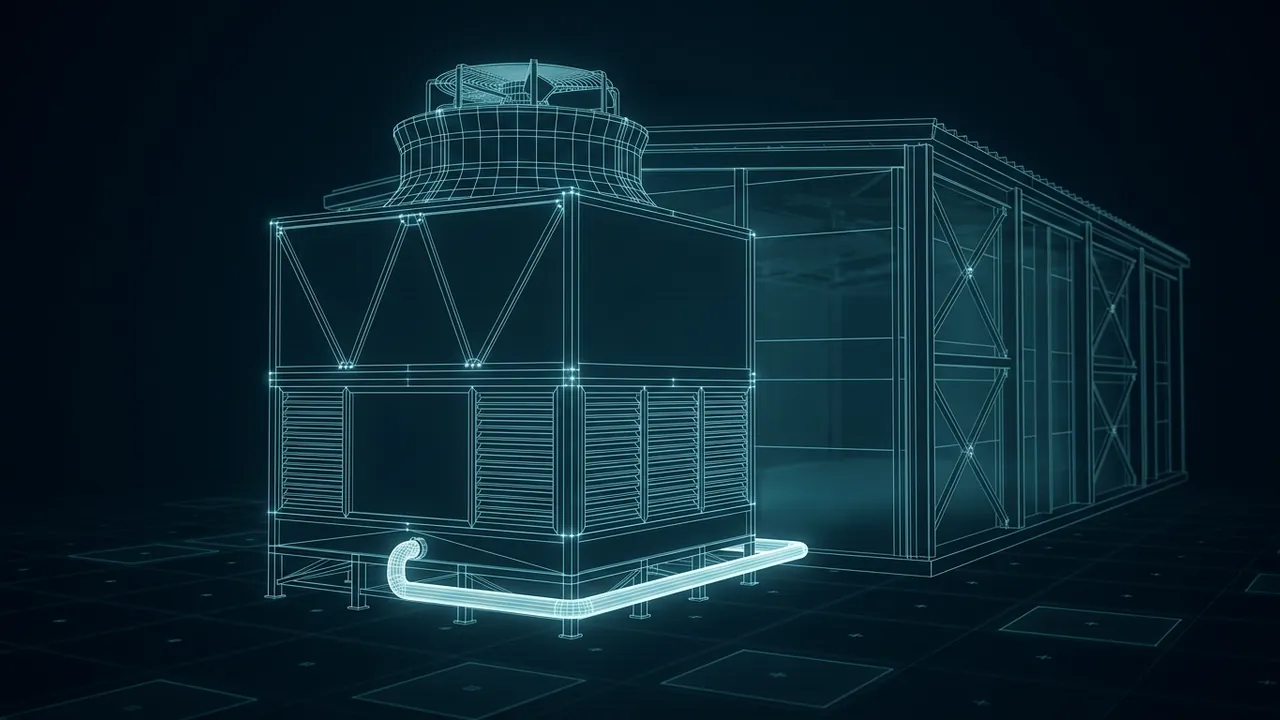
Energy gets most of the attention at data centers, and for decades it was the only efficiency number anyone asked about. Water was a utility bill in the back of the binder. That changed as campuses got bigger and moved into drier places, and now county boards, neighbors and investors all want a water number. The industry's answer is a three-letter metric that looks a lot like its famous cousin, PUE (power usage effectiveness). What is WUE, and how should you read it?
Water usage effectiveness (WUE) is a data center's annual on-site water use in liters divided by its annual IT energy in kilowatt-hours. A WUE of 1.0 L/kWh means one liter of water for every kilowatt-hour the servers use, and lower is better. The Green Grid created the metric. Dry-cooled sites can report close to zero, while sites with evaporative towers often land between about 1 and 2 L/kWh. Read it with care, because it leaves out the water used to make the electricity.
How Do You Calculate Water Usage Effectiveness?
You divide the year's site water by the year's IT energy. The Green Grid's water usage effectiveness white paper introduced the metric and its definitions, and the U.S. Department of Energy's Federal Energy Management Program uses the same formula in its guidance on cooling water efficiency for data centers.
Here is a worked example for a mid-size site:
- IT load averages 5 MW all year: 5,000 kW × 8,760 hours = 43,800,000 kWh.
- Site water meters show 20 million gallons used for the year.
- Convert to liters: 20,000,000 × 3.785 = 75,700,000 liters.
- WUE = 75,700,000 ÷ 43,800,000 ≈ 1.73 L/kWh.
Notice the units. WUE mixes liters and kilowatt-hours, so it is not a pure ratio like PUE. If you see a number reported in gallons per kWh, convert before you compare: 1 gallon per kWh is about 3.8 L/kWh.
What Water Counts?
WUE is meant to capture water used to run the data center, mainly cooling tower makeup, evaporative air cooling and humidification. That is where nearly all the water goes. Some reports also fold in restroom and kitchen use, which barely changes the result at a large site. When comparing numbers from different operators, check what each one included.
The Green Grid also defined a broader version, often called source WUE, that adds the water used off site to generate the electricity the data center buys. It is harder to calculate, because it depends on the power plants serving the grid, but it gives a fuller picture.
How Is WUE Different From PUE?
They answer different questions. Power usage effectiveness (PUE) divides total facility energy by IT energy, so it is a pure ratio with a floor of 1.0. WUE divides water by IT energy, so it has units and a floor of zero. A perfect PUE is impossible, but a WUE of zero is entirely achievable with dry cooling.
The two also pull against each other. Evaporation is the most energy-efficient way to reject heat, so it lowers PUE while raising WUE. Dry cooling does the opposite on hot days. That is why reporting one without the other can paint a misleading picture, and why careful operators publish both.
Measuring Site Water Accurately
A good WUE starts with good meters. The main utility meter tells you total water in, but it lumps cooling with everything else. Submeters on cooling tower makeup and blowdown lines show where the water actually goes, and comparing the two helps catch leaks, stuck valves and poor water treatment. If a site cannot tell you its makeup and blowdown separately, treat its WUE as an estimate.
What Is a Good WUE?
A good WUE depends on the cooling design and climate. Here is a practical way to read the numbers.
| WUE (L/kWh) | What it usually means |
|---|---|
| Near 0 | Dry coolers, air-cooled chillers or closed liquid loops |
| 0.1 to 0.5 | Hybrid or adiabatic cooling that only uses water on hot days |
| 0.5 to 1.5 | Evaporative cooling with plenty of free cooling hours |
| 1.5 and up | Heavy evaporative cooling, hot climate or few economizer hours |
Physics sets a rough ceiling for evaporative sites. Evaporating about 1.5 liters of water carries away one kWh of heat, and blowdown adds more. That is why a site relying on cooling towers all year tends to land in the upper rows.
Try different values in the calculator below to see what a given WUE means in gallons per day for your IT load.
Where Can WUE Mislead You?
WUE is useful, but a single annual number hides a lot. Here are the blind spots I would ask about before trusting any figure.
- It trades against PUE. Cutting water usually means more fan and compressor energy on hot days. A great WUE can come with a worse PUE, and vice versa.
- It ignores indirect water. A site with zero cooling water buying power from water-cooled thermal plants still has a water footprint.
- It ignores water source and scarcity. One liter of treated wastewater in a wet region is not the same as one liter of drinking water from a stressed aquifer.
- Annual averages hide peaks. A site might average 0.4 L/kWh but use several times that on the hottest week, and that peak sets the size of the water supply it needs.
- Fleet averages hide sites. A company reporting one WUE across many locations can blend a cool-climate site near zero with a desert site much higher.
How Do Data Centers Lower Their WUE?
The biggest lever is how the site rejects heat. Switching from evaporative towers to dry or hybrid coolers can drop WUE dramatically. That gets easier when the IT can run warm, because dry coolers then cover more of the year.
Liquid cooling helps here. A direct-to-chip system uses a coolant distribution unit to keep the server loop separate from the facility water, and that facility loop can often run warm enough to reject heat through dry coolers with no evaporation at all. Other practical steps include:
- Raising server inlet and chilled water temperatures within equipment specs.
- Improving water treatment so cooling towers run at higher cycles of concentration with less blowdown.
- Using reclaimed or non-potable water, which does not lower WUE but eases the strain on drinking supplies.
- Using economizers to maximize free cooling hours.
Water Usage Effectiveness Works Best Next to PUE, Not Instead of It
A WUE on its own is half a sentence. The other half is the PUE that came with it, the peak summer day behind the annual average and the source the water came from.
When someone hands you a water number, ask for those three things before you repeat it. And for a new site in dry country, set a WUE target in the first design meeting, because the choice between water and energy gets locked in with the cooling plant.