How Bitcoin Miners Sell Flexibility to the Grid
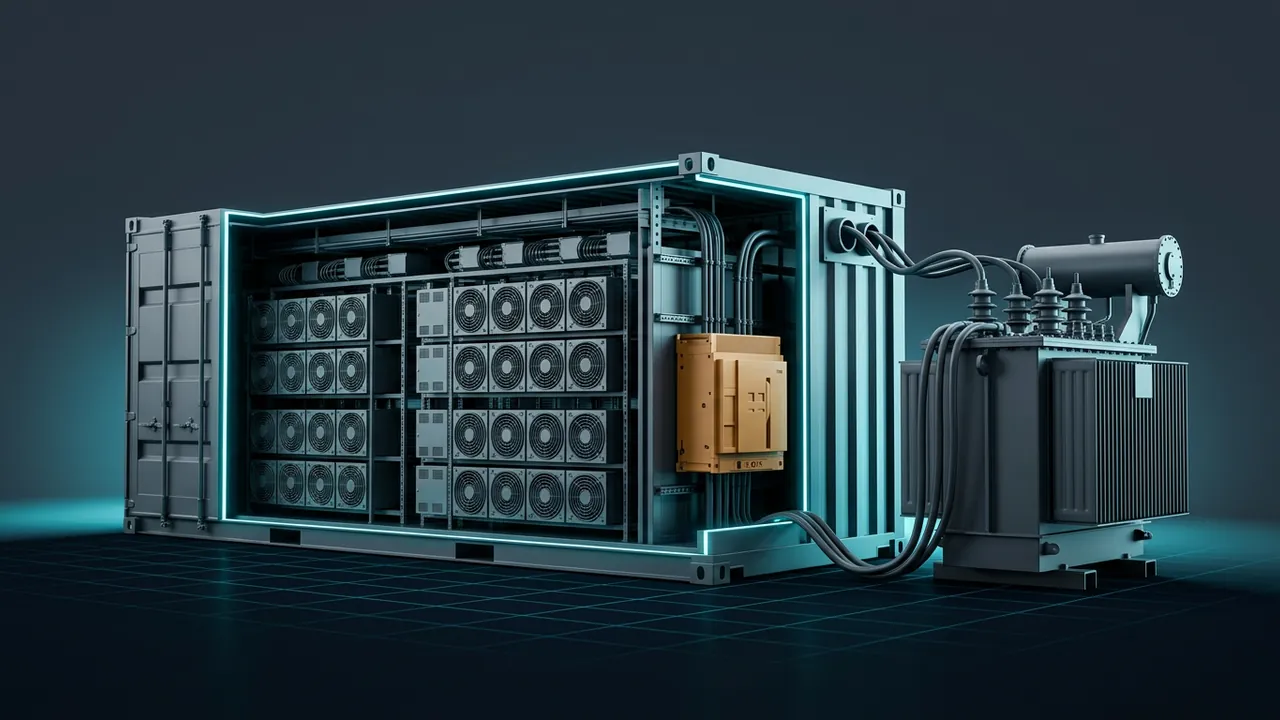
Most big electricity users pay to stay on no matter what. Hospitals, refineries, data centers. A bitcoin mine is a strange exception: it can shut off in seconds, lose nothing but a little revenue, and switch back on when the coast is clear. On a grid that occasionally runs short of power, that trait is worth real money. Bitcoin mining demand response is the business of turning that off switch into income. How do bitcoin miners actually sell their flexibility to the grid, and who pays them?
Bitcoin miners sell flexibility by agreeing to cut their power use when the grid needs it, and they get paid through several channels: avoided high prices, lower transmission charges, payments for standing by as reserves, and emergency programs. The simplest version is just turning off when wholesale prices spike. More formal versions involve registering with the grid operator as a resource that can drop load on command within minutes or even automatically. Texas, with its competitive ERCOT (Electric Reliability Council of Texas) market, is where most of this happens. The miner gives up some mining revenue during those hours and, if the deal is set up right, earns more than it lost.
Why Are Bitcoin Miners So Flexible?
Because a mining machine does not keep anything that matters in its memory. It runs the same calculation over and over, hunting for a winning answer. Shut it off and nothing is lost except the hashes it would have done while it was off. Turn it back on and it picks up where the whole network is.
Compare that with a regular data center. A server farm running websites and business systems has customers expecting answers every second. It carries backup generators and batteries precisely so it never has to shut down. Asking it to drop load is like asking a hospital to close for an afternoon.
A mine can drop most of its load in a few minutes. Some can step down in stages, turning off containers or rows one at a time. That makes the mine look less like a factory and more like a big dimmer switch.
How Does Bitcoin Mining Demand Response Make Money?
There are four main paths, and big mines often use several at once.
1. Turning Off When Prices Spike
In a market like ERCOT, wholesale prices swing from near zero to thousands of dollars per megawatt-hour (MWh) during tight hours. A miner buying at market prices simply shuts off when power costs more than the bitcoin it would mine.
Some miners buy power on a fixed-price contract instead, then sell it back during spikes. Here is the math, with illustrative numbers:
- Site load: 50 MW
- Contract power price: $35 per MWh
- Mining revenue: equal to $60 per MWh of power used (an assumption; this moves with bitcoin price and network difficulty)
- Real-time price during a one-hour spike: $1,000 per MWh
- Value of reselling the power for that hour: 50 MWh × ($1,000 − $35) = $48,250
- Mining revenue given up: 50 MWh × $60 = $3,000
One hour like that can pay for a lot of ordinary hours. How the resale works depends on the contract, so the details live in the power agreement, not the miner's software.
2. Dodging Peak Transmission Charges
In ERCOT, many large customers pay transmission costs based on their share of load during the four monthly peak intervals in June through September, often called 4CP (four coincident peaks). A miner that shuts off during those peaks can shrink its transmission bill for the following year. The trick is guessing which afternoons will set the peak, so miners curtail on the likely candidates.
3. Getting Paid to Stand By
Grid operators buy reserves, called ancillary services, to handle sudden problems like a big power plant tripping offline. Loads that can drop quickly can sell some of these services. ERCOT's own overview of demand response describes Load Resources as loads that can controllably reduce or increase consumption at ERCOT's direction. Some are Controllable Load Resources, integrated into ERCOT's dispatch and adjusted in real time. Others drop in large blocks when called.
A miner selling reserves gets paid for being ready, whether or not it is ever called. Those payments arrive every hour it is enrolled.
4. Emergency Programs
ERCOT's Emergency Response Service (ERS) pays participants to cut load within roughly 10 to 30 minutes during emergencies. According to ERCOT, ERS is deployed when the grid's responsive capacity falls below 3,000 MW. It is rarely triggered, but when it is, the grid needs every megawatt it can get.
What Does It Take to Join These Programs?

More than a laptop and a power switch. Formal programs come with equipment and paperwork:
- Representation by a Qualified Scheduling Entity, the company that handles the site's dealings with ERCOT.
- Revenue-quality metering and, for some services, real-time telemetry back to the grid operator.
- Control systems that can drop a set amount of load on command and prove it.
- For some reserve products, under-frequency relays that trip the load automatically when grid frequency sags.
- Testing to show the site can do what it promised.
The miner's own operations team also has to be ready. Curtailing hundreds of machines in a few minutes, then bringing them back without tripping breakers or overheating anything, takes practice.
Where Miners Get Burned
Flexibility has its own risks, and they are worth naming before anyone counts the credits:
- Missing a 4CP interval because the peak landed on a day nobody expected.
- Failing to deliver promised load reductions, which can mean penalties or losing eligibility.
- Wear on hardware and electrical gear from frequent hard stops and restarts, especially in summer heat.
- Contract surprises, such as power sold back at a different price point than the miner assumed.
- Long stretches of calm weather and low prices, when the flexibility earns very little.
None of these kill the idea. They just mean the spreadsheet should include a bad year, not only the best one.
Is It Good for the Grid?
It depends on who you ask, and both sides have a point. Supporters say flexible miners act like a shock absorber. They soak up cheap power when there is plenty, including surplus wind and solar, and get out of the way when things get tight. That flexibility can be cheaper than building a peaking plant that runs a few hours a year.
Critics counter that the miners are adding a large load in the first place, and then getting paid to remove part of it. Every megawatt they curtail is a megawatt they brought. They also point out that bills for demand response credits land on other customers.
My view from the oil patch: a load that can disappear on command is genuinely useful during an emergency, and the grid should pay fairly for that. Whether the overall deal is a good one depends on the program rules, which is a question for regulators, not a cheerleader on either side.
What About Miners That Are Not on the Grid?
Off-grid mines on flare or stranded gas use the same flexibility in a different direction. They are not following grid prices. They follow the gas. When a well's pressure drops or the gas buyer takes more, the mine sheds machines. When gas comes back, it ramps up.
Sizing those sites starts with how much gas each machine burns. The math behind bitcoin mining gas consumption runs from kilowatts per machine to Mcf per day, and it is simpler than most people expect.
Bitcoin Mining Demand Response Pays for Being Easy to Turn Off
Bitcoin mining demand response works because a mining machine can stop and restart without real harm. Miners turn that trait into money by curtailing during price spikes, dodging peak transmission charges, selling reserves and joining emergency programs.
Anyone getting into this business should start with the power contract and the market rules, not the machines. The machines are the easy part. Know which programs you qualify for, what metering and controls they require, and what you give up in mining revenue for each hour off. And check with your scheduling entity and counsel before you count on any credit, because program rules change.