What Is the Digital Oilfield? – Data From Wellhead to Office
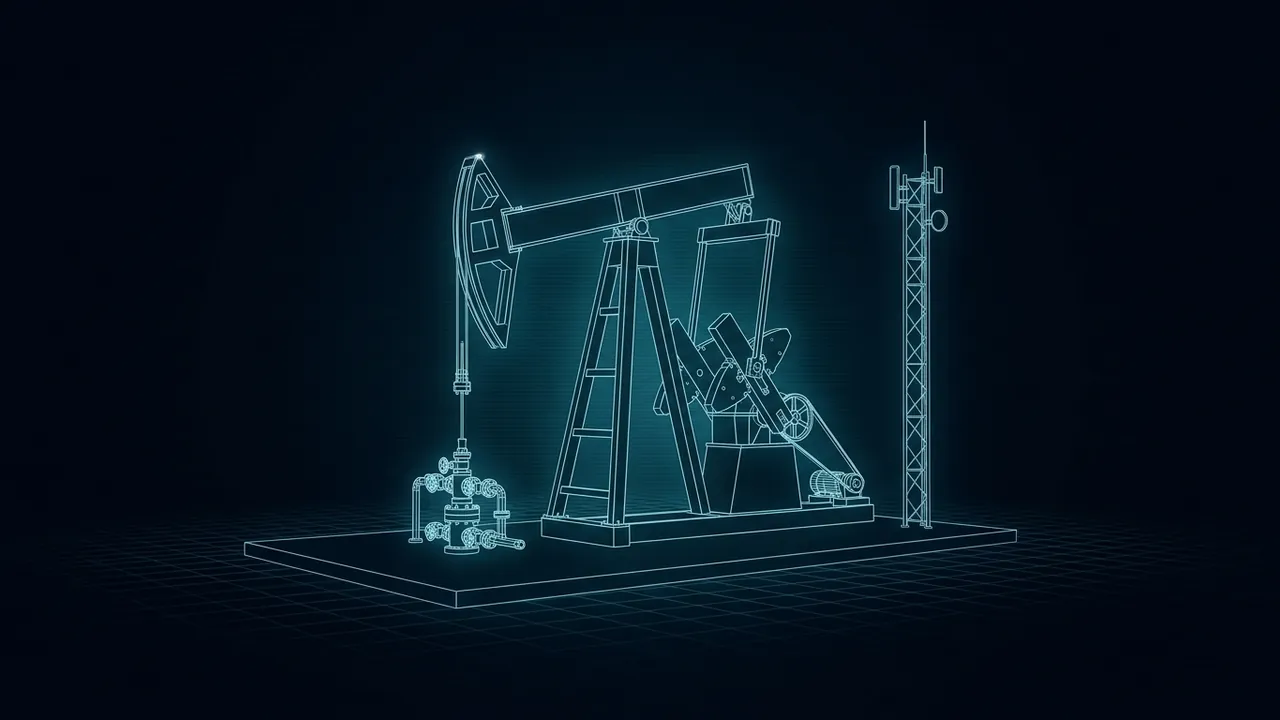
Picture a pumper with sixty wells on his route, a pickup, and a clipboard. Every day he drives a long loop of lease roads to read gauges, check tank levels and find out which well quit pumping overnight. Most of those stops find nothing wrong, and the one that matters might be the last on the list. The digital oilfield exists to fix that problem. What is the digital oilfield, and how does data get from the wellhead to the office?
The digital oilfield is the use of field sensors, controllers, communication networks and software to measure oil and gas operations continuously and act on that data remotely, instead of relying on manual readings and site visits. At the wellhead, transmitters measure pressure, flow, temperature, tank levels and pump behavior.
A controller on site collects those readings and sends them by radio, cellular or satellite link to a central host, where operators watch alarms, trend production and sometimes start, stop or adjust equipment. The term also covers the people and work processes that change once the data shows up. Done well, it means fewer wasted truck trips, faster response to failures and better production decisions.
What Does the Digital Oilfield Mean in Plain Terms?
It means the field reports on itself. Instead of a person visiting each well to learn what is happening, the well tells you, every few seconds or minutes, and raises its hand when something goes wrong.
SPE's Journal of Petroleum Technology describes the digital oil field as a mix of technology, process and people, and that framing is the right one. You can buy every sensor on the market and still get nothing if nobody changes the pumper route, the alarm response or the morning production meeting. In my experience the hardware is the easy part. The work processes are where projects stall.
You will also hear the phrase "IoT in oil and gas" (Internet of Things). It is mostly the same idea with a newer label: lots of small, connected sensors feeding software, often using cheaper wireless devices than traditional instrumentation.
What Gets Measured at the Wellhead and on the Pad?
The short answer is anything that tells you whether the well is producing, whether equipment is healthy and whether the site is safe. A typical producing pad might have these measurements:
- Pressures: tubing, casing and flowline pressure, which show how the well is flowing and whether something is plugged or leaking.
- Flow: gas through an orifice meter or electronic flow measurement (EFM) device, plus oil and water through liquid meters.
- Tank levels: radar or guided-wave level transmitters on oil and water tanks, so trucks get dispatched before a tank runs over.
- Artificial lift data: rod pump load and position (the "dynamometer card"), pump-off status, and motor amps and intake pressure on electric submersible pumps (ESPs).
- Equipment health: compressor temperatures, vibration, run status and shutdown codes.
- Safety and environment: gas detectors for hydrogen sulfide (H2S) and combustible gas, flare status, and sometimes cameras.
- Site basics: battery voltage, solar charge status, door switches and enclosure temperature.
Not every well needs all of it. A low-rate stripper well might justify a tank level and a pump status signal. A high-rate horizontal pad with ESPs and a compressor justifies far more, because an hour of downtime costs real money.
How Does Data Travel From the Wellhead to the Office?

It moves through four layers, and each one can fail on its own. Here is the path most systems follow.
- Sensors and transmitters convert a physical value into a signal, usually a 4–20 mA loop, a digital bus or a wireless message.
- A site controller, typically a remote terminal unit (RTU), a programmable logic controller (PLC) or a flow computer, reads the signals, runs local logic such as shutdowns, and stores data with timestamps.
- A communication link carries data off the pad: licensed or unlicensed radio, cellular, private LTE or satellite. Many sites hop by radio to a central tower, which then backhauls over fiber or cellular.
- A central host receives the data. This is the supervisory control and data acquisition (SCADA) system, plus a historian database and the dashboards that engineers, foremen and accountants actually look at.
If you want the details of that host layer, our guide to the SCADA system walks through polling, alarms and operator screens. The important point here is that data should be stored at the site and sent when the link comes back. Remote links drop, and a system that loses data every time a radio fades will never earn trust.
Polling vs Report by Exception
Older systems poll: the host asks each site for its values on a fixed cycle. That works, but it wastes bandwidth on numbers that have not changed. Newer designs report by exception, sending values only when they change by a set amount or when an alarm trips. Protocols such as DNP3 and MQTT support this style, which matters a lot on satellite or low-rate radio links.
Wireless Sensors Cut Wiring Costs
Trenching conduit across a pad is expensive. Wireless instrument standards such as WirelessHART let battery-powered transmitters talk to a gateway on site. Emerson documented a project using wireless pressure and temperature sensors on more than 200 PEMEX wells, with data relayed by satellite, which shows how far the approach scales.
What Are the Benefits of a Digital Oilfield?
The benefits fall into four buckets, and the first one usually pays for the project.
| Benefit | What changes |
|---|---|
| Fewer truck rolls | Pumpers visit wells that need attention instead of every well every day. |
| Less downtime | A pump-off or compressor shutdown triggers an alarm in minutes, not at the next site visit. |
| Better production | Engineers tune lift systems and chokes using real trends instead of daily snapshots. |
| Safety and compliance | Gas detection, flare monitoring and tank levels are recorded continuously, which helps with reporting. |
Fewer miles driven also means fewer chances for a crash on a lease road at dawn, and motor vehicle crashes are a leading cause of death for oil and gas extraction workers. That safety benefit rarely shows up in the business case, but it is real.
What Powers All This Equipment Out in the Field?
Most remote pads run their instruments on small solar panels and batteries, or on a low-voltage supply from a utility drop or generator where one exists. A typical RTU and radio draw only a few watts, so a modest panel and a battery sized for several cloudy days keeps them running.
The bigger loads (pumps, compressors and the generators that run them) need their own monitoring too. A wellsite generator that trips at 2 a.m. takes everything down with it. That is why generator remote monitoring belongs in the same plan as the well data, feeding the same SCADA host so one alarm screen shows the whole site.
Why Do Digital Oilfield Projects Stall?
Most stall for boring reasons, not technical ones. Here is the list I watch for on any rollout:
- No owner for the alarms. If nobody is clearly responsible for responding at night, alarms get ignored, then muted.
- Too many alarms. A system that cries wolf fifty times a day trains people to stop looking.
- Weak communications. A radio path survey skipped during design shows up later as gaps in the data.
- Bad data. An uncalibrated transmitter or a wrong tank strapping table makes every downstream report wrong.
- Cybersecurity as an afterthought. Remote access to field controllers needs real security design, not a default password and an open port.
- No plan for maintenance. Batteries die, panels get dirty and antennas get knocked crooked. Someone has to budget for that.
None of these require new technology to fix. They need a project plan that treats people and process with the same care as hardware.
Where Should an Operator Start?
Start small and pick the wells where data pays fastest. A sensible first phase looks like this:
- Choose a pilot area with high-value wells, frequent failures or the longest drive times.
- Survey communications first, before buying instruments, so you know what bandwidth you actually have.
- Instrument the measurements that drive decisions: production, tank levels, lift status and safety alarms.
- Agree on who answers each alarm and how fast, then write it down.
- Run the pilot long enough to compare truck miles, downtime and production against similar wells without it.
- Expand in phases, standardizing hardware and screen layouts as you go.
Standardization is easy to underrate. When every pad uses the same controller, the same tag names and the same screen layout, a new technician can troubleshoot any site in the field.
The Digital Oilfield Pays Off When Crews Use the Data
Strip away the buzzwords and the digital oilfield is a field that measures itself and reports back: sensors at the wellhead, a controller on the pad, a link off the lease and a SCADA host in the office, tied together by people who know what to do when an alarm goes off.
The technology is mature and affordable. The hard part is changing routes, alarm habits and maintenance budgets so the data actually gets used. If you are planning one, survey your communications first, start with the wells that cost you the most when they go down, and make sure every alarm has a name next to it.