What Is a Modular Data Center? – Prefab, Containers and Skids
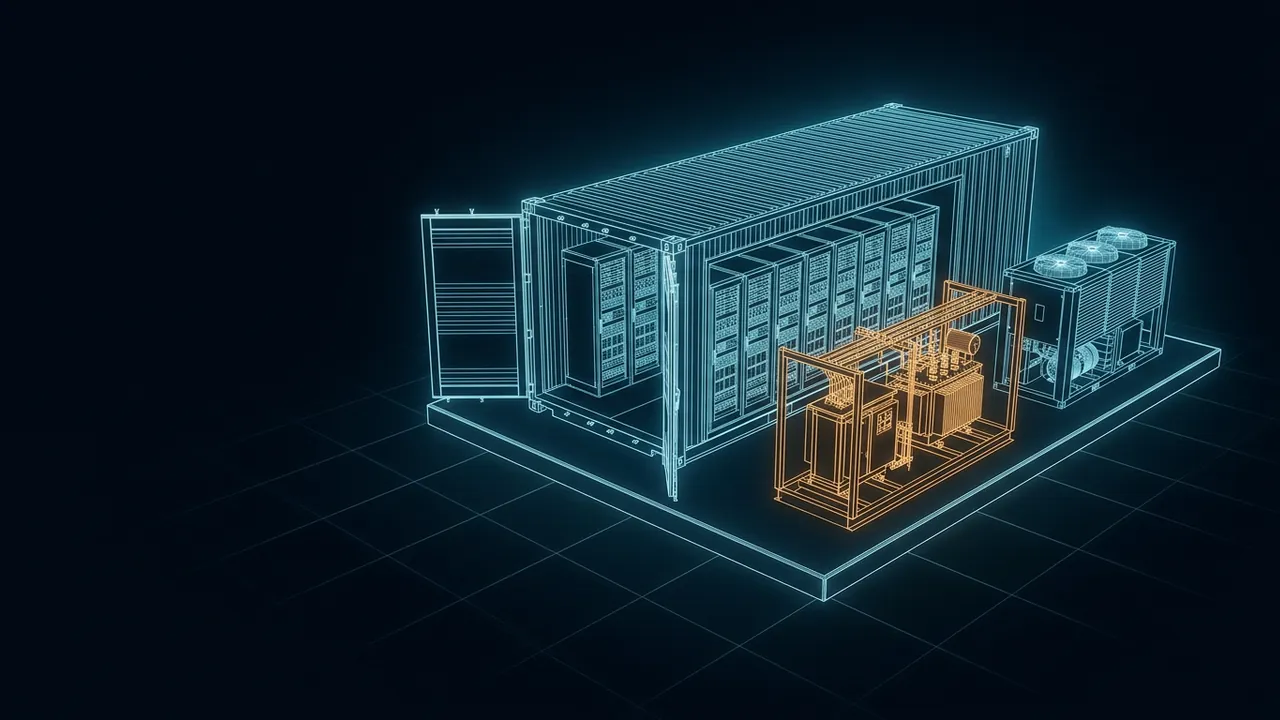
A data center can arrive on a truck. The racks, the cooling, the power distribution and the fire suppression all show up already installed and tested, and the crew on site sets the module on a pad, connects power, fiber and sometimes water, and starts commissioning. For a remote site, a fast-growing company or anyone who cannot wait years for a custom building, that is an appealing idea. It also comes with trade-offs that the brochures tend to skip. What is a modular data center, and when does it make sense?
A modular data center is a facility built from standardized, factory-made units, such as containers, prefabricated rooms and skid-mounted power or cooling systems, that are assembled and tested off site, shipped, and connected together where they will run.
Modules can hold IT racks, electrical gear like switchgear and UPS systems, or cooling equipment, and capacity grows by adding more of them. The main benefits are speed, because factory work happens while the site is prepared, along with predictable quality and the ability to scale in steps. The main limits are shipping size, less design flexibility and tight maintenance space.
What Counts as a Modular Data Center?
The term is looser than most people think. Schneider Electric's data center team made this point in an article on modular versus prefabricated data center definitions: "modular" can describe almost any design built in repeatable blocks, while "prefabricated modular" means at least one pre-engineered, factory-integrated and pre-tested group of systems delivered on a skid or in an enclosure.
On real projects, you will run into four common forms:
- Containerized data centers: IT racks, cooling and power distribution inside a shipping-container-style box.
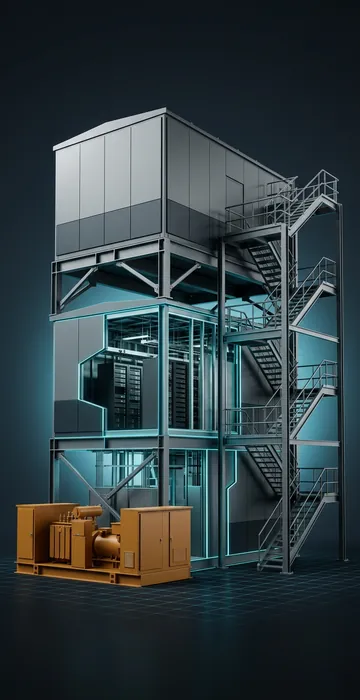
- Prefabricated data halls or pods: larger factory-built rooms or panels assembled into a hall on site.
- Power skids and electrical houses: switchgear, UPS, transformers and controls in a factory-built enclosure.
- Cooling modules: packaged chillers, dry coolers or air handlers delivered as complete units.
A project might use only one of these, such as prefab electrical rooms inside a traditional building, or combine all of them into a fully modular campus.
How Does a Modular Data Center Get Built?
The big difference from a traditional build is that site work and equipment assembly happen at the same time, in different places. A typical sequence:
- Design: the owner picks standard modules or customizes a design, sized for the IT load and cooling approach.
- Factory build: modules are assembled, wired, piped and loaded with equipment in a controlled shop.
- Factory acceptance testing: the vendor and owner test systems before shipping, often under load.
- Site preparation, in parallel: grading, foundations or pads, utility connections and fiber.
- Delivery and setting: trucks bring the modules, and cranes set them in place.
- Connection: crews tie in power, fiber, cooling water if used, and the controls between modules.
- Site commissioning: integrated testing proves everything works together before IT goes live.
The overlap between steps 2 and 4 is where most of the time savings come from. In a traditional build, much of the equipment can only be installed after the building is enclosed.
What Are the Benefits of a Modular Data Center?
Speed is the headline, but it is not the only reason people choose modular designs.
Faster Deployment
Building in parallel cuts the calendar. For a small edge site, a standard module can sometimes ship from inventory, which skips most of the design and build time.
Predictable Quality
Factory crews build the same design repeatedly, with good lighting, the right tools and no weather delays. Testing before shipment catches wiring and piping errors early, when they are cheap to fix.
Pay as You Grow
Capacity comes in blocks. Instead of building a large hall and filling it slowly, an owner can add modules as demand grows, keeping capital tied to actual use.
Mobility and Remote Deployment
Some modules can be moved. That suits temporary needs, disaster recovery, military uses and sites tied to a resource that will not last forever, like a gas field. Crusoe, for example, built a business around modular data centers powered by flare gas at oil fields, deploying modules of about 250 kW each in several western states, according to Data Center Dynamics.
What Are the Downsides?
Every benefit has a matching limit. Here are the ones that catch buyers off guard:
- Shipping limits: modules must fit on a truck and under bridges. In the U.S., loads wider than about 8.5 feet usually need oversize permits, which caps module width and shapes the interior.
- Tight service space: containers leave narrow aisles, which can make maintenance and equipment swaps awkward.
- Less flexibility: a standard module is designed around certain rack densities and cooling methods. Changing those later is harder than in an open hall.
- Cost at large scale: for very large, stable campuses, a traditional building can cost less per MW than many small modules.
- Permitting questions: local officials may treat a module as a building, as equipment or as something in between, which affects codes, inspections and timelines.
- Vendor lock-in: modules from one supplier may not integrate easily with another's.
Modular vs Traditional Data Center: How Do They Compare?
| Factor | Modular | Traditional build |
|---|---|---|
| Schedule | Factory and site work in parallel | Mostly sequential on site |
| Scaling | Add modules in steps | Build big, fill over time |
| Quality control | Factory testing before shipment | Field installation and testing |
| Design flexibility | Limited by module size and standard designs | Wide open |
| Best fit | Edge, remote, phased or temporary sites | Large, stable, long-life campuses |
| Relocation | Possible for some module types | Not practical |
Can a Modular Data Center Be Highly Reliable?
Yes. Reliability comes from the design, not the construction method. A modular facility can include redundant power paths, spare cooling units and backup generation just like a traditional building. It can be designed to the same principles described in the industry's data center tiers, from basic capacity up to concurrently maintainable and fault-tolerant designs.
The catch is that a tier rating applies to the whole site, including utility feeds, generators and fuel, not just to a module. A container advertised as "Tier III ready" still needs the right supporting infrastructure around it to earn that label. Ask vendors exactly what is included and what the site must provide.
Do Modular Data Centers Cost Less?
Sometimes, but not always, and rarely by as much as people expect. The equipment inside a module, such as UPS systems, switchgear, chillers and racks, costs about the same whether it is installed in a factory or a field building. The savings come from less site labor, fewer weather delays, less rework and, above all, a shorter schedule, which means paying for less construction financing and earning revenue sooner.
Against that, modules add enclosure costs, shipping, cranes and some duplication, since each unit carries its own walls, controls and sometimes its own cooling. For a small or remote site, the math usually favors modular. For a very large, stable campus, a traditional building often wins on cost per MW. The honest way to decide is to price both for your actual load and schedule, including the value of going live months earlier.
Is a Modular Data Center the Same as a Micro Data Center?
Not quite. A micro data center is a very small, self-contained enclosure, often a single rack or a few, with its own power protection, cooling and monitoring. It is modular in spirit, but it serves a branch office, a factory floor or a remote site rather than a large facility. Our guide to the micro data center covers those small sites in detail. Modular designs, by contrast, scale from one container up to many megawatts.
Where Do Modular Data Centers Make the Most Sense?
They shine where speed, remoteness or uncertainty matter more than the lowest possible cost per MW at huge scale:
- Remote industrial sites such as oil and gas fields, mines and pipelines that need local computing.
- Flare gas and stranded gas projects, including bitcoin mining, where the module goes to the fuel.
- Edge sites near cell towers, factories or small towns that need computing close to users.
- Expansions at existing campuses where adding capacity quickly beats waiting for a new building.
- Temporary or emergency capacity during construction, disasters or relocations.
What Should You Ask a Modular Vendor?
Go in with a checklist. Here is mine:
- What exactly is inside the module, and what must the site provide?
- What rack density and cooling method is it designed for, and how much headroom is there?
- What ambient temperature, altitude and dust conditions is it rated for?
- What does factory acceptance testing include, and can we witness it?
- How has the design been handled by permitting authorities in other jurisdictions?
- What are the lead time, shipping dimensions and crane requirements?
- How are service access, spare parts and remote monitoring handled?
The Modular Data Center Trades Flexibility for Speed
A modular data center is a facility built from factory-made units, such as containers, prefab rooms and power or cooling skids, assembled on site. It wins on speed, quality control and the ability to grow in steps, and it fits remote, edge and phased projects especially well.
It gives up some flexibility, service space and, at very large scale, cost efficiency. If you are considering one, define your load, density and reliability target first, then hold vendors to clear answers about what the module includes and what your site must supply.