What Is a Pipeline Lateral? – Getting Gas to a New Site
You found the land. The fiber is close, the county is friendly and the engines are on order. Then someone asks where the gas comes in, and the room goes quiet, because the big transmission line is eleven miles away across three ranches and a creek. That gap between the mainline and your fence is where a lot of project schedules go to die. What is a pipeline lateral, and what does it take to build one to a new site?
A pipeline lateral is a short branch line that carries natural gas from a larger transmission or gathering pipeline to a specific customer, such as a power plant, factory or data center. It usually starts with a tap on the mainline, runs through a meter and pressure regulating station, and ends at the plant's fuel gas system. Laterals can be a few hundred feet or dozens of miles long, and they are sized to the customer's peak daily gas demand. For many on-site power projects, the lateral takes longer to finish than the generators take to arrive.
What Are the Parts of a Pipeline Lateral?
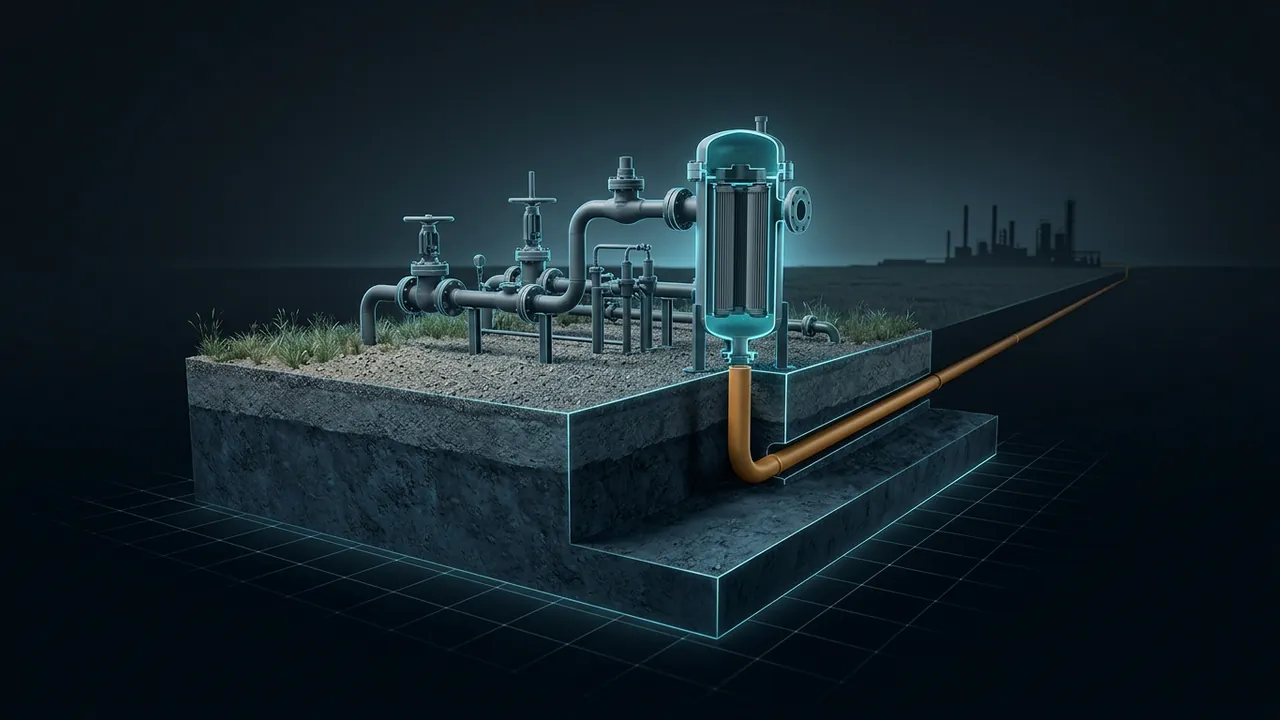
A lateral is more than pipe in a ditch. From the mainline to the plant, you usually find these pieces:
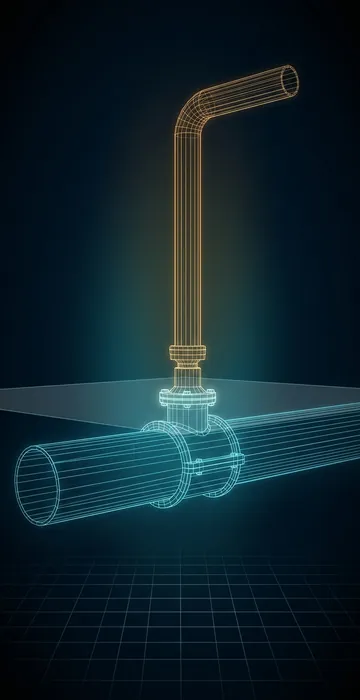
- The tap: a fitting welded onto the mainline, often installed by hot tapping, which cuts into the pipe while it stays in service. Specialty crews do this work under strict procedures, because the line is still full of high-pressure gas.
- Isolation valves: valves at the tap and along the route so the lateral can be shut in without touching the mainline.
- The meter station: filters or separators to catch liquids and debris, a custody transfer meter, and often a gas chromatograph that measures heating value and composition.
- Pressure regulation: regulators drop pipeline pressure to what the plant needs. Big pressure drops chill the gas, so many stations add a heater.
- The line itself: coated steel pipe, buried, with cathodic protection to fight corrosion, and sometimes launchers and receivers for pipeline inspection tools called pigs.
Who owns which piece varies. Often the pipeline company owns the tap and meter station, because that is where custody of the gas changes hands, and the customer owns everything downstream.
Why the Gas Gets Cold
When gas expands through a regulator, it cools. Engineers call this the Joule-Thomson effect, and a common rule of thumb for natural gas is roughly 7°F of cooling for every 100 pounds per square inch (psi) of pressure drop. Cut pressure from 900 psi to 300 psi and you lose about 6 × 7 = 42°F. On a winter morning, that can push the gas below freezing and below the point where water and heavier hydrocarbons condense, which is why line heaters show up at so many meter stations.
How Big Does a Pipeline Lateral Need to Be?
The lateral is sized to peak demand plus some margin, at the pressure the plant needs at the far end. Run the numbers for an example 100 MW plant with a heat rate of 8,500 Btu/kWh:
- Fuel per hour: 100,000 kW × 8,500 Btu/kWh = 850 million British thermal units (MMBtu) per hour.
- Fuel per day: 850 × 24 = 20,400 MMBtu per day.
- Volume, at about 1,037 Btu per cubic foot: 20,400 ÷ 1.037 ≈ 19,700 Mcf per day, or about 19.7 million cubic feet per day (MMcf/d).
A pipeline engineer then picks a pipe diameter and wall thickness that can carry that flow over the route's length while arriving with enough pressure. Turbines usually need more inlet pressure than reciprocating engines. If the lateral cannot deliver it, the plant adds fuel gas compressors, which bring their own cost and maintenance. Planning for future expansion matters too. Upsizing the pipe on day one costs far less than laying a second line later.
Who Builds and Pays for a Lateral?
There are three common models, and each has trade-offs:
| Model | How it works | Trade-off |
|---|---|---|
| Pipeline-built | The pipeline company builds and owns the lateral and recovers cost through rates or a contribution from the customer | Pipeline handles permits and safety; customer often signs a long firm contract |
| Customer-built | The plant owner builds and owns the line from the meter station to the plant | More control over schedule; customer takes on construction and operating duties |
| Third-party | A midstream company builds it under a service agreement | Shifts capital off the customer's books; adds another party to coordinate |
Pipelines rarely build for free. Expect either a direct contribution toward construction or a long-term firm transport commitment that lets the pipeline recover its investment. That ties the lateral question tightly to firm gas supply, since the same contract often covers both.
How Much Does a Pipeline Lateral Cost?
Cost depends on diameter, length, terrain, land rights, crossings and local labor, so honest answers come as ranges tied to a specific route. For a sense of scale, a 2015 GE Reports article on virtual pipelines cited pipeline construction at roughly $1 million per kilometer, which is part of why trucked gas sometimes wins for small or temporary loads.
The big cost drivers are easy to list. Rock costs more to trench than soil. Every road, railroad, river and foreign pipeline crossing needs its own design, permits and often horizontal directional drilling. Right-of-way payments rise near towns. The meter station and tap can cost a meaningful share of the total on a short lateral. Get a real estimate from a pipeline engineering firm before you commit to a site, not after.
What Permits Does a Lateral Need?
It depends on who owns the line and whether it crosses state lines. Laterals built by interstate pipelines fall under the Federal Energy Regulatory Commission (FERC), sometimes through a streamlined blanket certificate for smaller projects. Intrastate lines answer to state regulators. In Texas, that means the Railroad Commission, and in Oklahoma, the Corporation Commission. Safety rules for gas pipelines come from the federal Pipeline and Hazardous Materials Safety Administration (PHMSA), mostly in 49 CFR Part 192, whether or not the line is interstate.
On top of that, expect easements from every landowner on the route, county road crossing permits, environmental reviews for wetlands and waterways, and sometimes cultural resource surveys. Easements are where schedules slip most. One holdout landowner can force a reroute, and condemnation authority depends on who owns the line and state law. Check with counsel early.
How Long Does It Take to Build a Pipeline Lateral?
A short, simple lateral with willing landowners can move in months. Longer lines with many crossings, contested easements or federal review can take a year or more before the first pipe goes in the ground. A practical sequence looks like this:
- Feasibility: confirm the mainline has capacity and pressure at the tap location.
- Route survey, landowner outreach and easement negotiation.
- Engineering, permitting and long-lead procurement (valves, meters, line pipe).
- Construction, hydrostatic testing and commissioning.
- Gas quality checks and first gas to the plant.
Gas quality deserves its own look at the end of that list. Gas from an interstate transmission line usually meets a pipeline tariff spec. Gas tapped from a gathering system near the field may not. If your lateral starts close to the wellhead, read up on wellhead gas quality before you assume the fuel is ready to burn.
Scout the Pipeline Lateral Before You Fall for the Land
A pipeline lateral is the short branch that turns a pipeline map into an actual fuel supply for your project: a tap, a meter station and a line sized to your peak load. It is also one of the longest-lead items on many on-site power projects, because it depends on land, permits and a pipeline partner, not just equipment.
Treat it that way. When you evaluate a site, measure the distance to a mainline that has spare capacity, sketch a route, count the crossings and talk to the pipeline early. A great site eleven miles from gas with three tough landowners may be worse than a decent site two miles from a tap. Out here, the shortest pipe usually wins.